Views: 222 Author: Linda Publish Time: 2026-06-19 Origin: Site


Content Menu
● What Makes a Wicker Basket Truly Eco-Friendly?
● Benefit 1 – Rapidly Renewable Natural Fibers
>> Rattan: Fast-Growing and Forest-Friendly
>> Seagrass, Water Hyacinth, Bamboo and More
● Benefit 2 – Lower Chemical Footprint with Water-Based Finishes
>> Why Finishes Matter for Health and Environment
>> Aligning with Global Sustainability Expectations
● Benefit 3 – Supporting Traditional Handcrafted Weaving Communities
>> Home-Based Artisans and Generational Skills
>> How a 22-Year Factory Builds Ethical Partnerships
● Benefit 4 – Durable, Multi-Purpose and Plastic-Reducing
>> From Gift Baskets to Everyday Storage
>> Extending Product Life and Reducing Waste
● Natural vs Synthetic Woven Materials (And Why Both Matter)
● How to Choose Truly Eco-Friendly Wicker Baskets as a Consumer
● Behind the Scenes: 22 Years Inside a Woven Basket Factory
● Practical Use Cases for Eco-Friendly Wicker Baskets at Home
● Simple Care Tips to Maximize Basket Lifespan
● Clear CTA – Partner with a Proven Eco-Friendly Basket Manufacturer
● FAQ
>> 1. Are all wicker baskets eco-friendly by default?
>> 2. How do eco-friendly wicker baskets reduce plastic use?
>> 3. What is the difference between rattan and bamboo baskets?
>> 4. Are synthetic (faux rattan) baskets always bad for the environment?
>> 5. How can I verify that a basket brand is genuinely eco-friendly?
If you want to cut down on plastic, organize your home beautifully, and choose products that genuinely respect the planet, eco-friendly wicker baskets are one of the simplest high-impact upgrades you can make. Drawing on over two decades of manufacturing experience at HNL Co., Ltd., this guide explains how high-quality woven baskets made from rattan, seagrass, water hyacinth, bamboo and other natural fibers deliver real environmental, social, and practical benefits—far beyond most mass-produced plastic alternatives. [ecodrive]
Most people think "wicker" refers to a specific plant, but it actually describes a weaving technique, not a single material. Eco-friendly wicker baskets focus on fibers and finishes that are renewable, low-impact, and safe at the end of their life. [salt]
Key pillars of eco-friendliness in wicker and woven baskets include: [salt]
- Renewable or recycled materials (such as rattan, seagrass, water hyacinth, bamboo, paper rope).
- Low-chemical finishing (water-based lacquers instead of heavy solvent-based chemicals).
- Durable construction that prolongs product life and reduces waste.
- End-of-life safety, ideally compostable or recyclable where infrastructure exists.
From a production standpoint, a factory like HNL Co., Ltd. can validate these factors through material traceability, process records, and long-term export performance audited by customs and buyers. [productiveblogging]
Many eco-friendly wicker baskets are made from rattan, a climbing palm that grows quickly in tropical forests and can be harvested without clearing trees. Rattan is naturally strong, flexible, and light, making it ideal for durable baskets that withstand daily use. [salt]
The original article highlights that rattan requires little water and is typically grown with minimal pesticide use, reducing pressure on soil and water systems compared with some resource-heavy crops. When manufacturers apply water-based lacquers instead of heavy oil polishes, the finishing process also produces fewer volatile organic compounds (VOCs), which is better for both workers and indoor air quality. [ecodrive]
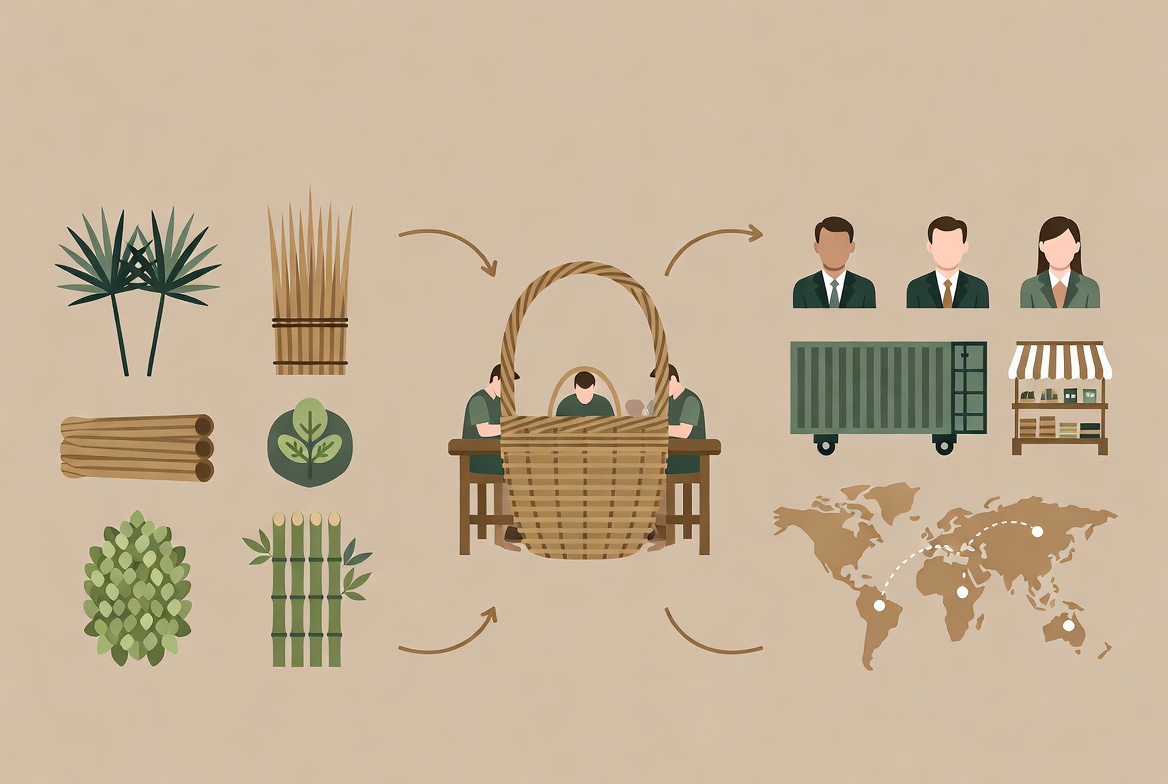
Beyond rattan, factories like HNL Co., Ltd. specialize in a wide range of renewable plant fibers that support eco-friendly design: [myeja]
- Seagrass – A fast-renewing aquatic plant that offers a rustic, textured look and naturally earthy tones.
- Water hyacinth – An invasive aquatic plant in many regions; turning it into baskets can help remove excess growth from waterways and transform a problem into a resource. [myeja]
- Bamboo – One of the fastest-growing plants in the world, known for its strength and versatility in structural and decorative weaving. [myeja]
- Fern, vines, and other local fibers – Often sourced from established harvesting regions, supporting rural economies and traditional crafts.
From an industry perspective, using local or regional plant fibers reduces transportation emissions per unit and helps diversify supply chains away from fossil-based plastics. [greenhaveninteractive]
A basket's finish is often overlooked, but it has a major impact on health and sustainability. The original article notes that high-quality rattan baskets can be finished with water-based lacquers instead of chemical-heavy oil polishes. Water-based lacquers typically emit fewer VOCs and are easier to handle safely in small workshops and home weaving environments. [greenhaveninteractive]
For a manufacturer operating for 22 years, process control is critical: switching from solvent-heavy coatings to water-based systems often involves retraining artisans, adjusting drying times and investing in safer materials. Over time, this reduces worker exposure to harsh solvents and improves indoor air quality for end customers using baskets in bedrooms, nurseries and kitchens. [greenhaveninteractive]
Global buyers and end consumers increasingly expect:
- Reduced hazardous chemicals in consumer products.
- Transparent information on coatings and finishes.
- Long-term supplier partnerships with compliance track records.
HNL Co., Ltd.'s long-term recognition as an "A-class management enterprise" by Chinese customs signals consistent export performance, documentation quality and compliance—an important trust signal for overseas brands looking for environmentally responsible suppliers. [productiveblogging]
The original article emphasizes that many wicker baskets are woven by local Indonesian artisans working in their homes, often with multiple family members contributing to each basket. This reflects a wider pattern in the woven-basket industry, where home-based weaving preserves generational craftsmanship and offers flexible income opportunities in rural communities. [rsisinternational]
From a user's point of view, choosing handwoven eco-friendly baskets means your purchase supports:
- Preservation of intangible cultural heritage and traditional patterns.
- Household-level incomes in rural areas, especially for women and older family members.
- Skills transfer from older artisans to younger generations, keeping crafts alive. [rsisinternational]
A manufacturer with two decades of experience can play a key role in making this ecosystem sustainable:
- Standardizing quality while respecting local weaving styles and techniques.
- Offering stable orders so artisans can rely on weaving as a dependable income stream.
- Training on safe material handling, ergonomic working methods and defect reduction.
These behind-the-scenes practices are often invisible to end customers, but they are essential to making eco-friendly claims meaningful and avoiding greenwashing. [greenhaveninteractive]
According to the original article, wicker baskets serve a wide variety of uses and often become long-term replacements for plastic or paper bags. Customers commonly repurpose gift baskets for closet, pantry, office and bathroom storage, or even as decorative waste bins. [salt]
As a homeowner who has transitioned to eco-friendly woven storage baskets, the most noticeable benefits are:
- One basket often replaces dozens of disposable bags over its lifespan.
- Neutral, natural textures fit into almost any interior style.
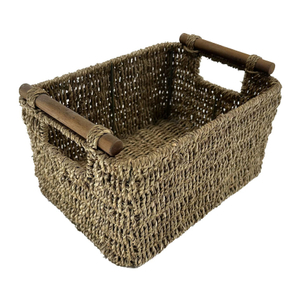
- Sturdy handles and reinforced rims make baskets easy to carry and reorganize.
The original article stresses that baskets made from high-quality rattan last longer and are less likely to be discarded quickly. In manufacturing practice, this durability comes from: [salt]
- Carefully selected, mature fibers.
- Tight, even weave density.
- Quality inspection at multiple stages.
When a rattan or seagrass basket finally reaches end-of-life, its plant-based body can degrade into compost under the right conditions, helping reduce landfill waste compared to plastic storage products that can persist for decades. [greenhaveninteractive]
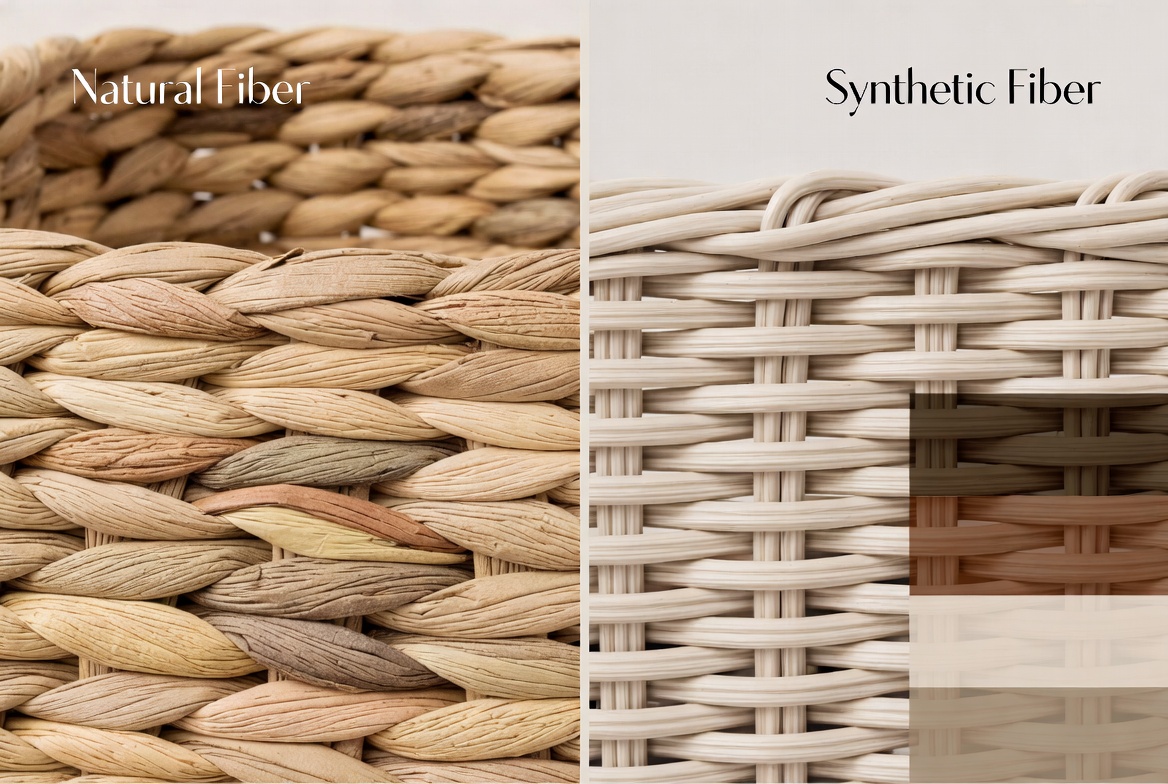
While natural fibers are ideal for many eco-friendly wicker basket applications, modern homes and commercial settings sometimes need synthetic or blended materials for extra durability or moisture resistance. [lagunafabrics]
HNL Co., Ltd. manufactures with both:
- Natural fibers such as seagrass, water hyacinth, rattan, bamboo, vines and ferns.
- Engineered fibers like faux rattan (plastic rattan), paper rope, woven webbing and plastic strips.
When used responsibly, synthetic materials can:
- Improve weather resistance for outdoor baskets or bathroom storage.
- Enable precise color control for brand-specific or interior-design palettes.
- Extend product life in high-traffic environments (retail displays, hotel rooms, restaurants).
From a sustainability perspective, the most responsible path is often material matching: using natural fibers where longevity and performance allow, and reserving synthetic or blended solutions for demanding settings where they prevent frequent replacement and additional resource use. [greenhaveninteractive]
To avoid greenwashing and make confident choices, look for these practical checkpoints when buying eco-friendly wicker baskets online or in-store: [ecodrive]
1. Material transparency
- Does the product page clearly state the primary materials (e.g., rattan, seagrass, bamboo, water hyacinth, paper rope)?
- Are synthetic components (such as faux rattan or plastic bands) clearly identified rather than hidden?
2. Finishing details
- Look for phrases like "water-based lacquer" or "low-VOC finish." [salt]
- Avoid products with strong chemical odors or vague, unlisted finishes.
3. Durability signals
- Check close-up photos for tight, even weaving and reinforced rims.
- Read reviews mentioning long-term use, load capacity and how the basket holds up after months of use.
4. Production story
- Does the brand share information about where and how the baskets are made (e.g., home-based Indonesian artisans, long-term weaving villages, certified factories)? [rsisinternational]
- Are there any third-party certifications, long-term export credentials or government recognitions?
5. End-of-life and reusability
- Prefer baskets that are repairable, reusable and repurposable across rooms and seasons.
- When possible, choose designs without excessive mixed-material components that are hard to separate or recycle.
By following these steps, you reward brands and factories that are genuinely investing in better materials, better processes and stable artisan partnerships. [ecodrive]
Speaking from an industry perspective, running a woven-basket factory for over two decades requires much more than simply buying materials and shipping containers. Manufacturers like HNL Co., Ltd. must continuously balance cost, quality, and sustainability as regulations and buyer expectations evolve. [greenhaveninteractive]
Key long-term practices that support eco-friendly outcomes include:
- Material diversification: Investing in multiple natural fibers (rattan, seagrass, water hyacinth, bamboo, fern, vines) to avoid over-stressing any single resource base. [myeja]
- Process refinement: Gradually shifting from heavy solvent-based finishes to water-based lacquers while maintaining consistent color and durability. [salt]
- Compliance and traceability: Maintaining export documentation standards high enough to qualify as an A-class management enterprise, which supports transparency and accountability in trade. [salt]
- Design collaboration: Working closely with global brands to develop stackable, flat-pack or multi-use designs that optimize shipping efficiency and extend the product's usable life.
For buyers and brand owners, partnering with an experienced factory that already operates at this standard reduces the risk of quality issues, shipment delays or reputational damage from unverified sustainability claims. [productiveblogging]
Eco-friendly woven storage baskets are not just decorative; they are highly functional organizers that help you keep your space tidy while reducing plastic. Popular use cases include: [basketgem]
- Living room: Store blankets, magazines, remote controls and kids' toys in large lidded baskets.
- Bedroom and closet: Use rattan or seagrass baskets for folded clothes, accessories and seasonal items.
- Pantry and kitchen: Organize dry goods, snacks and reusable bags in breathable woven bins.
- Bathroom: Keep towels and toiletries in moisture-tolerant baskets (for example, bamboo or faux rattan with proper ventilation).
- Entryway: Place sturdy baskets for shoes, umbrellas and everyday grab-and-go items.
Because they are visually warm and neutral, one set of eco-friendly wicker baskets can move with you through multiple homes and interior styles, extending their lifespan even further. [basketgem]
With basic care, quality woven baskets can last for many years, further amplifying their environmental benefits. [greenhaveninteractive]
- Keep them dry: Avoid prolonged contact with water; if a basket gets wet, let it air dry in a shaded, ventilated area.
- Clean gently: Use a soft brush or cloth to remove dust; for stubborn spots, a lightly damp cloth is usually enough.
- Avoid overloading: Respect weight limits, especially for tall or narrow baskets that can deform under heavy loads.
- Rotate and repurpose: Rotate baskets between rooms over time to refresh your space and avoid uneven wear.
These simple steps help protect the integrity of the woven fibers and reduce the likelihood that you will need to replace baskets prematurely. [greenhaveninteractive]
If you are a brand, retailer or importer looking to build or expand a sustainable wicker and woven basket line, working directly with a seasoned manufacturer is critical. With 22 years of production experience in natural and synthetic woven materials, HNL Co., Ltd. can support you from design concept to finished product with:
- Expertise in rattan, seagrass, water hyacinth, bamboo, vines, ferns, paper rope, faux rattan and plastic-based weaves.
- Flexible production models using home-based artisans and workshop facilities.
- Export-proven quality and management recognized as an A-class management enterprise by Chinese customs.
Reach out to discuss your next eco-friendly wicker baskets collection, and co-create products that are beautiful, durable and genuinely better for people and the planet.
No. "Wicker" refers to a weaving technique, not a specific material, so baskets can be made from natural fibers, synthetic fibers, or a mix of both. Truly eco-friendly wicker baskets use renewable or recycled materials, low-chemical finishes and durable construction. [salt]
High-quality woven baskets often replace plastic bins, plastic bags and disposable gift packaging. Because they are durable and multi-purpose, one basket can serve for years across different rooms and uses. [basketgem]
Rattan is a climbing palm with a solid core and excellent flexibility, ideal for rounded shapes and intricate weaving. Bamboo is a hollow grass that offers strong, straight elements well suited to structural frames and flat panels. Both are renewable, but they deliver different aesthetics and performance characteristics. [myeja]
Not necessarily. Synthetic or faux rattan can be appropriate for outdoor or high-moisture environments where purely natural fibers would fail quickly. When used carefully, they can extend product life and reduce overall resource use, especially if designs avoid unnecessary material mixing. [lagunafabrics]
Look for clear information on materials, finishes, production locations and artisan involvement, as well as any certifications or long-term export credentials. You can also check independent reviews for comments on durability, odor and long-term satisfaction. [productiveblogging]
1. BasketLady. “Our Wicker Baskets Are Eco-Friendly!” https://www.basketlady.com/blogs/news/4-reasons-why-our-wicker-baskets-are-eco-friendly
2. SALT.agency. “Sustainable SEO strategies to avoid greenwashing.” https://salt.agency/blog/seo-strategies-to-avoid-greenwashing/
3. Productive Blogging. “15 easy ways to improve your website’s E-E-A-T.” https://www.productiveblogging.com/eat/
4. Ecodrive. “How to Use SEO to Grow a Sustainable Brand.” https://www.ecodrive.community/updates/how-to-use-seo-to-grow-a-sustainable-brand
5. Green Haven Interactive. “Sustainable SEO: Incorporating Eco-Friendly Practices into Digital Marketing.” https://greenhaveninteractive.com/sustainable-seo-incorporating-eco-friendly-practices-into-digital-marketing/
6. 草编资讯 News (Chinese industry article on straw and woven packaging). https://www.myeja.com/news/industry_news/8308.html
7. RSIS International. “Industry Activities, Quality of Inaul Weaving and its Sustainability in the Bangsamoro Autonomous Region in Muslim Mindanao.” https://rsisinternational.org/journals/ijriss/
8. Additional context on sustainable textiles and synthetic fibers in manufacturing. https://lagunafabrics.com and https://www.huiliang-textile.com/en/category/Recycled-Fabric.html