Views: 222 Author: Linda Publish Time: 2026-06-11 Origin: Site


Content Menu
● Picnic Essentials Checklist for a Stress‑Free Outdoor Meal
● Why Your Picnic Basket Matters More Than You Think
● Build Your Picnic Checklist From the Ground Up
● The Four Phases of a Picnic (Expert Planning Lens)
● Core Picnic Essentials Every Basket Needs
>> Utensils, Cutting Board, and Knife
>> Plates, Cups, and Leak‑proof Containers
● Comfort‑Boosting Picnic Accessories Worth Packing
>> Serveware Caddy for Organized Serving
>> Basket Liner for Protection and Easy Cleanup
>> Ice Packs or Cooler Insert for Food Safety
● What to Pack in a Picnic Basket (Food That Travels Well)
>> Drinks That Pack and Pour Cleanly
● How to Pack a Picnic Basket Like an Expert
>> Rule 1 – Heavy at the Base, Fragile at the Top
>> Rule 2 – Wet and Dry Separation
>> Rule 3 – One‑Touch Access to Essentials
● Picnic Basket Ideas for Different Group Sizes
>> Packing for a Family or Group
>> Keeping Your Basket "Always Ready"
● Choosing a Picnic Basket: Natural vs. Synthetic Woven Materials
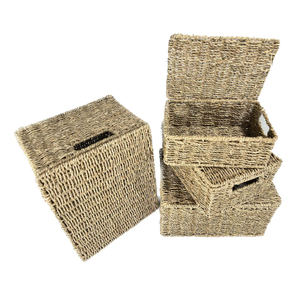
>> Natural Materials (Seagrass, Water Hyacinth, Rattan, Bamboo)
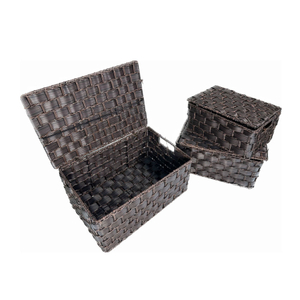
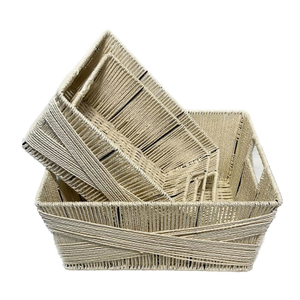
>> Synthetic and Blended Materials (Imitation Rattan, Paper Rope, Plastic Straps)
● Quick Packing Template – Picnic Essentials Checklist
● How a Well‑Made Basket Supports Sustainable, Long‑Term Use
● Call to Action – Make Your Next Picnic Effortless
● FAQs About Picnic Essentials and Baskets
A stress‑free picnic starts long before you spread the blanket on the grass. When you plan the food, supplies, and basket layout in advance, the day feels relaxed instead of rushed, and you spend more time enjoying the people with you.
I am writing this guide from the dual perspective of a picnic lover and a weaving manufacturer that has spent 22 years making durable baskets and storage products from natural fibers like seagrass, water hyacinth, rattan, fern, and bamboo. Drawing on both personal experience and industry best practices, this article walks you through a complete picnic essentials checklist, explains how to choose and pack your basket, and shows you how to keep your gear ready for last‑minute outings. [sana-commerce]
A picnic often looks simple from the outside, but in practice you are managing fragile food, limited space, and changing weather. The picnic basket is the organizing system that keeps all of this under control.
A well‑designed basket does more than just carry things. It should:
- Keep plates, cups, and food containers upright
- Protect fragile items from bumps during transport
- Make it easy to see and reach what you need in seconds
- Hold up to repeated outdoor use without loosening or breaking
From a manufacturer's perspective, we see a clear pattern: customers who invest in a sturdy woven basket with reinforced handles and a stable base use it for years, while cheap, poorly‑made baskets tend to crack or deform after one or two seasons. [siteimprove]
Instead of starting with a random list from memory, first think through the actual outing. This aligns your checklist with real‑world needs rather than guesswork.
Ask yourself:
- How many people are coming?
- How far will I carry the basket?
- How long will we stay outside?
- Will there be shade or full sun?
- Do we have kids or older adults in the group?
These questions determine everything from basket size to how much water you bring. For example, if you need to walk 20 minutes from the parking area, a lighter, compact setup becomes more important than packing every "nice‑to‑have" accessory. [outbrain]
Industry best practice for checklists is to map them to phases of use, not product categories. For picnics, think in four phases: [marketveep]
1. Travel – Carrying the basket from home to the picnic spot
2. Setup – Spreading the blanket, arranging food and accessories
3. Meal – Serving, eating, topping up drinks
4. Cleanup & Return – Packing leftovers, trash, and used linens
Walk through each phase in your mind and write down what you actually touch and use. This simple mental rehearsal prevents the classic "we forgot the knife" or "no opener for this bottle" problems that ruin otherwise perfect outings.
Certain picnic essentials belong in every basket, no matter where you go or what you eat. These are the items that directly affect comfort and practicality.
A picnic feels more like an event when you define your space with a comfortable blanket. Choose:
- A cotton or wool blanket that folds flat and packs tight
- A size big enough for everyone to sit without crowding
- A material that can handle a bit of damp ground
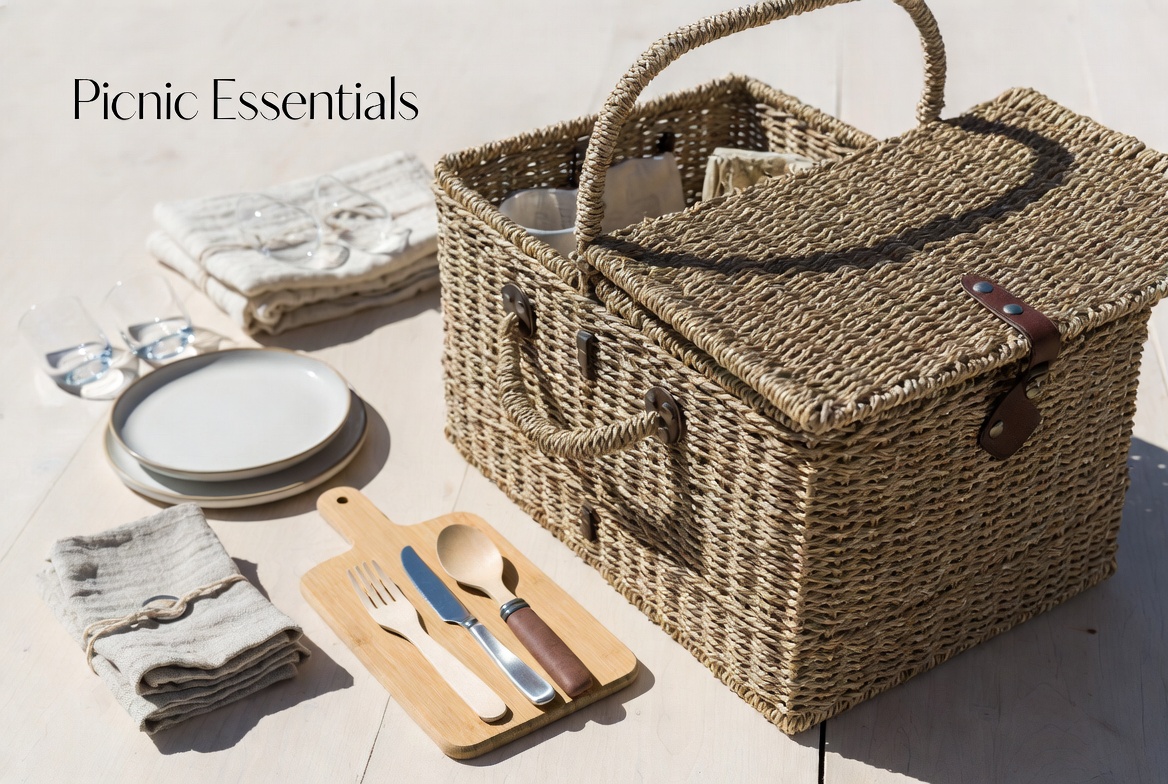
Cloth napkins are more durable than paper outdoors, resist wind, and can be shaken out and reused without creating waste. Keeping a dedicated set in your basket means you are always ready to go. [wgcontent]
In user surveys and customer emails, the most commonly forgotten items are utensils and a sharp knife. To avoid this: [infomedia]
- Keep a permanent set of reusable forks, knives, and spoons in the basket
- Add a small wooden cutting board for cheese, fruit, or bread
- Include a compact folding or sheathed knife that lives in the basket
Store everything in a cloth pouch or caddy so you can grab it in one motion.
Lightweight plates and cups that stack neatly save space and prevent breakage. Good options include enamel, bamboo, or sturdy reusable plastic.
For drinks, cups with lids or bottles with secure tops reduce spills on sloped ground or uneven picnic tables. Pair them with leak‑proof food containers to keep wet and dry foods separate and to prevent soggy sandwiches.
Beyond the basics, a few smart accessories can dramatically improve your picnic experience without overloading the basket. [infomedia]
A serveware caddy keeps utensils, napkins, and condiments organized once you arrive. Instead of reaching back into the basket for every fork or sauce bottle, you can place the caddy on the blanket or table and let everyone help themselves.
From a weaving manufacturer's side, we design caddies to:
- Fit inside a standard picnic basket footprint
- Stand upright even when loaded
- Provide separate compartments for utensils, jars, and napkins
This reduces clutter and shortens setup time, especially for families and small groups.
A removable basket liner is one of the simplest upgrades you can make. It:
- Protects the interior from spills and crumbs
- Cushions glass jars and baked goods near the base
- Can be removed and washed after each outing
For handwoven baskets made from seagrass, rattan, or similar fibers, a liner also reduces surface wear and extends the basket's lifespan. [siteimprove]
Food safety is critical for any outdoor meal, especially in warm weather. A flat ice pack or slim cooler insert placed at the bottom of the basket can:
- Keep salads, cheeses, and drinks at a safer temperature
- Eliminate the need to carry a separate bulky cooler
- Support longer outings without compromising freshness
This is one of the highest‑value accessories if your picnics last more than a couple of hours.
The best picnic foods are those that travel well, taste good at room temperature, and need minimal prep on‑site.
Based on both personal experience and common picnic patterns, these foods perform consistently well outdoors:
- Hard cheeses and cured meats
- Sliced vegetables (carrot sticks, cucumbers, cherry tomatoes)
- Grain salads that do not rely on soft dairy dressings
- Sturdy sandwiches or wraps that will not fall apart
- Simple dips in sealed containers
Pack each item separately to protect textures and prevent sogginess.
For dessert and light snacking, dense baked goods travel better than delicate pastries. Consider:
- Pound cake or loaf slices
- Shortbread and oatmeal cookies
- Nuts, seeds, and dried fruit
These items are easy to portion, share, and repack if you have leftovers.
Sealed thermoses, bottles, and carafes are ideal for picnics. Popular choices include still water, iced tea, lemonade, and lightly sparkling drinks.
For cooler months, a thermos of warm tea or coffee adds comfort, especially if the outing extends into the evening. Avoid flimsy containers or highly carbonated drinks that can build pressure and leak during transport.
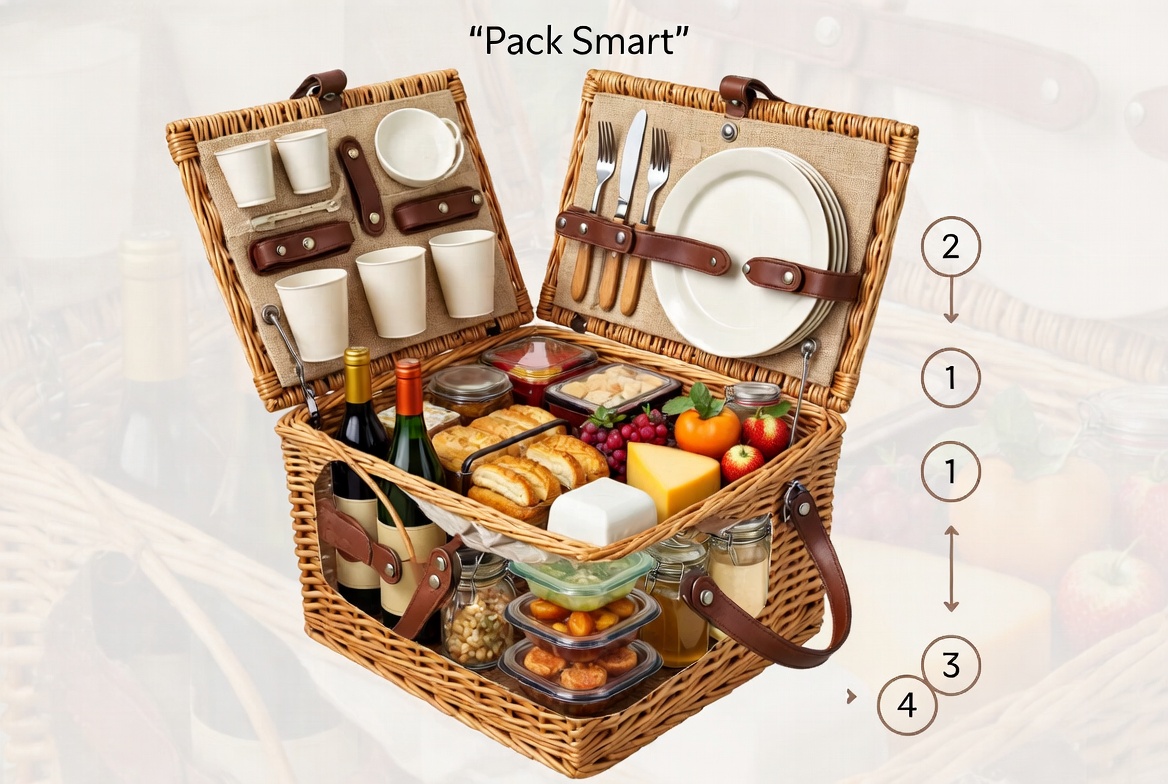
How you arrange items inside the basket matters just as much as what you bring. With 22 years of weaving and user feedback, we see three simple packing rules that work in nearly every scenario. [wgcontent]
Always place heavier items like bottles, thermoses, and solid food containers at the base. Above them, add softer or more fragile items such as baked goods, fruit, and cups.
Use cloth napkins or a folded towel to fill gaps, so nothing shifts when you walk. This prevents crushed food and helps the basket stay balanced.
Keep wet and dry items in clearly separated containers or compartments. This is especially important if you carry sauces, dressings, or juicy fruits.
A leak in transit can soak napkins, plates, or the basket itself. Using sealed containers and a liner minimizes the impact if something spills. [wgcontent]
Place frequently used items near the top or at the opening:
- Utensils and napkins
- Cups and plates
- First drink bottle or thermos
The goal is simple: you should not have to unpack the entire basket just to pour water or grab a fork. When your layout supports one‑touch access, the picnic feels smoother and more relaxed. [infomedia]
Your packing strategy should match how many people you plan to serve.
For a couple's picnic, a smaller basket with a secure lid is usually enough. Focus on:
- A short, curated menu instead of many options
- One main drink and one dessert
- A compact set of essentials (blanket, napkins, utensils, plates)
Overpacking a small basket often leads to crushed food and unnecessary weight.
For families or friend groups, a larger basket—or even two baskets—works better. A practical approach is:
- Basket 1: Food and drinks
- Basket 2: Supplies, blanket, caddy, and accessories
This split keeps each basket lighter and more organized, and it allows two people to help carry the load.
One of the most effective picnic habits is treating your basket like a ready‑to‑go kit. After each outing, restock and keep these items inside: [wgcontent]
- Cloth napkins
- Full utensil set and knife
- Cutting board
- Liner or inner cloth
- Basic wipes or hand sanitizer
Then, when the weather looks perfect, all you need to add is food and drinks.
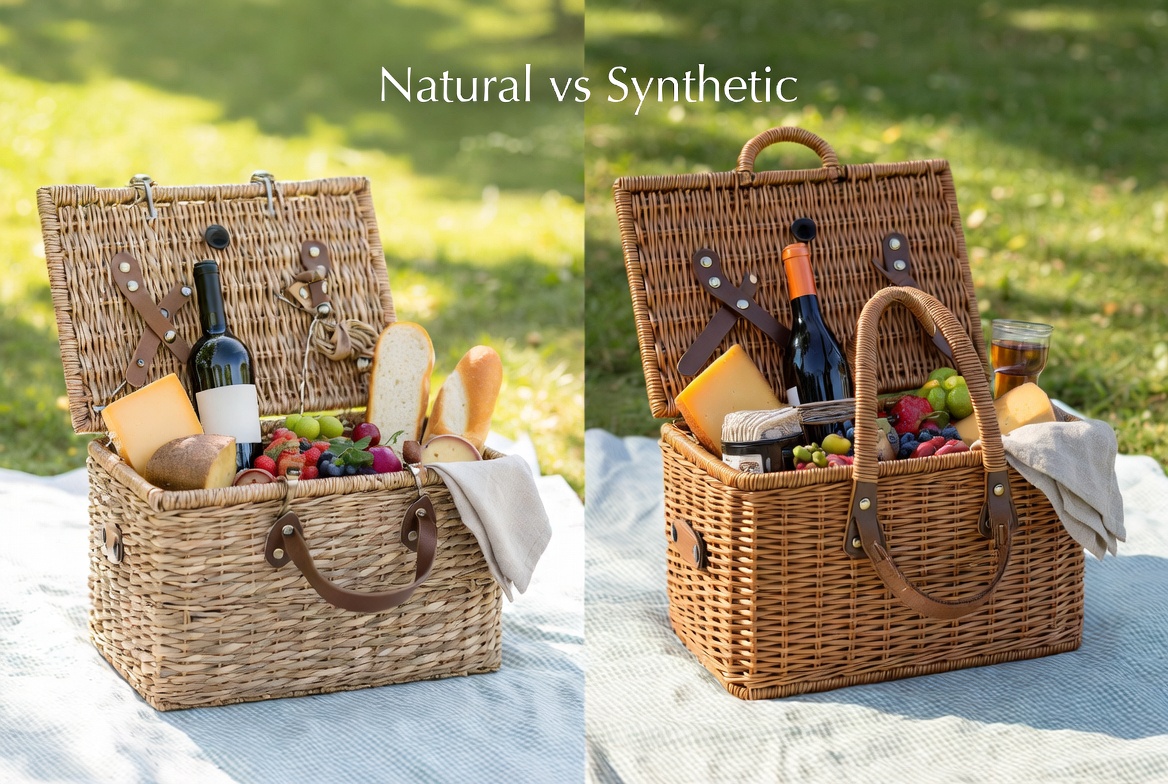
As a manufacturer specializing in both natural fibers and synthetic weaving materials, we see different strengths for different use cases. [sana-commerce]
Natural woven baskets offer a warm, organic look and a tactile feel that many picnic lovers prefer. Common benefits include: [shopify]
- A soft, natural aesthetic that pairs well with outdoor settings
- Lightweight construction with good breathability
- Environmentally friendly sourcing when responsibly harvested
However, they need proper care: avoid long exposure to heavy rain, and store them in a dry, cool place to preserve the fibers. [siteimprove]
Synthetic weaving materials, such as imitation rattan or durable plastic straps, offer improved resistance to moisture and easier cleaning. They are suitable when: [siteimprove]
- You often picnic near water or in humid climates
- You want a basket that can be wiped clean quickly
- You prefer a more uniform, modern appearance
A growing number of users choose hybrid solutions, combining a natural outer weave with a synthetic liner or base for added durability. [shopify]
Use this checklist as a starting point and adapt it to your own style. [outbrain]
Picnic Essentials (Core)
- Woven picnic basket with liner
- Blanket (cotton or wool)
- Cloth napkins
- Reusable utensils (forks, knives, spoons)
- Cutting board and compact knife
- Plates and cups
- Leak‑proof food containers
- Drinks in sealed bottles or thermoses
Comfort Accessories
- Serveware caddy
- Ice pack or slim cooler insert
- Wet wipes or hand sanitizer
- Small trash bag
Food Ideas
- Hard cheeses and cured meats
- Grain salad or pasta salad
- Sliced vegetables and simple dips
- Bread or wraps
- Cookies, cake slices, nuts, and dried fruit
Print or save this list and keep it near your basket so you can pack quickly and confidently.
From an industry standpoint, the most sustainable product is the one you keep using for years. Handwoven baskets with reinforced handles, tight weaves, and quality finishing can easily support many seasons of picnics, storage, and everyday use if you care for them properly. [siteimprove]
Basic care guidelines include:
- Wiping the interior with a dry or slightly damp cloth after each outing
- Using a soft brush to remove crumbs and debris from the weave
- Avoiding soaking or leaving the basket in damp locations
- Storing it in a cool, dry space away from direct sun when not in use
These habits protect the fibers—whether natural or synthetic—and keep your basket ready whenever you feel like heading outdoors.
A truly effortless picnic is the result of thoughtful planning, a clear essentials checklist, and a basket you can trust. When you combine durable woven construction with smart accessories like liners, caddies, and ice packs, outdoor meals become something you look forward to—rather than a project you worry about. [wgcontent]
If you are ready to upgrade your setup, start by reviewing your current basket: check the handles, base, and interior, then decide whether it is time for a more reliable woven basket made from seagrass, water hyacinth, rattan, or a moisture‑resistant synthetic material. With a solid foundation and the checklist above, your next picnic can be easier, more organized, and far more enjoyable for everyone at the blanket. [shopify]
Q1: What are the most important picnic essentials for any outing?
The core essentials are a sturdy picnic basket, cloth napkins, a comfortable blanket, reusable utensils, a cutting board, plates, cups, food in secure containers, and at least one reliable drink option. These items cover the practical needs of most outdoor meals regardless of group size.
Q2: How do I make a picnic checklist that I will actually use?
Think through the outing from start to finish—travel, setup, meal, and cleanup—and list the items you will touch in each phase. Keep this list printed or saved on your phone, and update it after each picnic based on what you missed or overpacked. [outbrain]
Q3: What supplies should I keep permanently inside my picnic basket?
Keep a dedicated set of cloth napkins, reusable utensils, a small cutting board, a compact knife, and a removable liner stored in the basket at all times. This way, you only need to add food and drinks when you decide to go. [wgcontent]
Q4: How can I keep food safe during warm‑weather picnics?
Use a flat ice pack beneath temperature‑sensitive items, pack food in leak‑proof containers, and avoid dishes that spoil quickly in heat, such as those with soft dairy or heavy mayonnaise. Keep the basket shaded until you are ready to serve and eat.
Q5: How should I care for a handwoven picnic basket between outings?
After each picnic, wipe out crumbs with a dry cloth, use a soft brush on the weave, and let the basket air dry fully if it encountered moisture. Store it in a cool, dry environment and avoid prolonged exposure to direct sunlight or damp areas to maintain its shape and strength. [siteimprove]
1. Amish Baskets – "The Complete Picnic Essentials List For A Stress‑Free Outdoor Meal" (source article used for structure and baseline ideas).
2. Semrush – "Google E‑E‑A‑T: What It Is & How It Affects SEO." Guidance on content quality, authority, and structure. [semrush]
3. Semrush – "Long‑Tail Keywords: The Ultimate Guide." Best practices for integrating long‑tail keywords into headings and body content. [semrush]
4. Siteimprove – "SEO for Manufacturing: Boost your search presence." Insights on manufacturing‑focused content and buyer‑centric checklists. [siteimprove]
5. WG Content – "E‑E‑A‑T for content quality." Recommendations on showing experience, structuring content, and maintaining trust with readers. [wgcontent]
6. Outbrain – "How to Rank for Long‑Tail Keywords: A Quick Guide." Strategies for aligning content with searcher intent and improving on‑page UX. [outbrain]
7. Infomedia – "Rank Better with EEAT: Unique Content Is Key to Blogging." Practical tips on formatting, readability, and avoiding walls of text. [infomedia]