Views: 222 Author: Linda Publish Time: 2026-06-01 Origin: Site


Content Menu
● Why China Leads Seagrass Basket Manufacturing
● Selection Criteria: How We Evaluated These Manufacturers
● Top 10 Seagrass Basket Manufacturers in China
>> 1. HNL Co., Ltd. – Comprehensive Natural & Synthetic Weaving Solutions
>> 2. Nanning S.D. Import & Export Trading Co., Ltd. – Diverse Material Specialization
>> 3. Guangxi Nanning Sunflower Import and Export Trade Co., Ltd. – Garden & Outdoor Focus
>> 4. Guangxi Bobai County Manufacturers – Industrial Cluster Advantage
>> 5. Yuanda Handicrafts (Anyang, Henan) – Northern Manufacturing Alternative
>> 6. Mid-Sized OEM Specialists (Nanning Region)
>> 7. Large-Scale Export Factories (10,000+ Monthly Units)
>> 8. Artisan Cooperatives – Premium Quality Segment
>> 9. Hybrid Material Innovators
>> 10. Vertically Integrated Plantation-to-Factory Operations
● Manufacturer Comparison Overview
● Understanding Seagrass Basket Quality Standards
>> Material Grade Classification
>> Critical Manufacturing Process Checkpoints
>> Industry Insider Insight: The "Double Weaving" Deception
● Environmental & Compliance Certifications Explained
>> ISO 9001:2015 Quality Management
>> ISO 14001 Environmental Management
>> CE Marking & RoHS Compliance
>> FSC Certification for Bamboo/Rattan Components
>> GACC Class A Management Enterprise
● Buyer's Guide: Navigating Seagrass Basket Procurement
>> Factory Verification Process
>> Sample Evaluation Methodology
>> Payment Terms & Risk Mitigation
>> Logistics Considerations Specific to Seagrass Baskets
>> Communication Best Practices
● Common Procurement Pitfalls & Avoidance Strategies
>> Pitfall 1: Material Substitution in Bulk Production
>> Pitfall 2: Expired or Fraudulent Certifications
>> Pitfall 3: Hidden Subcontracting
>> Pitfall 4: Inadequate Packaging Leading to Transit Damage
>> Pitfall 5: Intellectual Property Theft
● Industry Trends Shaping Seagrass Basket Manufacturing (2026)
>> Sustainability Certification Demand
>> Nearshoring & Supply Chain Diversification
>> Digital Integration & Traceability
China dominates the global seagrass basket manufacturing landscape, accounting for over 60% of worldwide handwoven natural fiber basket exports as of 2026. The country's strategic advantages—concentrated in Guangxi Province's industrial clusters near ASEAN borders—combine decades of traditional weaving expertise with modern production infrastructure and export compliance systems. For procurement managers seeking reliable seagrass basket suppliers, understanding the nuanced differences between manufacturers becomes critical to securing quality products, consistent delivery schedules, and long-term partnership stability. [tradingeconomics]
China's seagrass basket industry benefits from unique geographical and economic advantages that competitors struggle to replicate. Guangxi Province, particularly the Nanning-Bobai corridor, hosts over 300 textile and handicraft manufacturing enterprises above designated size, creating a complete supply chain ecosystem from raw material cultivation to finished product export. The region's proximity to Vietnam and other ASEAN nations ensures access to premium seagrass, water hyacinth, and rattan materials while maintaining lower labor costs than coastal manufacturing hubs. [gxsd.goldsupplier]
China's export infrastructure further strengthens its competitive position, with total exports reaching a record USD 359.44 billion in April 2026, demonstrating resilient international trade capabilities despite geopolitical headwinds. The General Administration of Customs China (GACC) Class A Management Enterprise certification system provides buyers with pre-vetted suppliers who meet stringent quality control, compliance, and operational standards. [made-in-china]
Professional procurement requires transparent evaluation frameworks rather than subjective rankings. Our selection methodology prioritized six critical dimensions that distinguish exceptional seagrass basket manufacturers from commodity suppliers: [keico.com]
1. Certification Verification: Active ISO 9001:2015 quality management systems, ISO 14001 environmental certifications, and product-specific compliance (CE, RoHS, FSC where applicable) [globalsources]
2. Production Capacity & Flexibility: Ability to handle both small-batch customization (MOQ 500-1,000 units) and large-scale orders (50,000+ units monthly) with consistent lead times
3. Material Sourcing Transparency: Documented supply chains for seagrass, water hyacinth, rattan, and synthetic alternatives with material grade specifications [made-in-china]
4. Export Track Record: Minimum 5 years of documented international shipping experience, preferably with GACC Class A certification indicating compliance history [made-in-china]
5. OEM/ODM Capabilities: In-house design teams, sample development processes under 15 days, and intellectual property protection agreements
6. Communication Infrastructure: English-speaking sales teams, responsive quote turnaround (under 48 hours), and willingness to provide factory audit access
These criteria address the most common sourcing failures: material substitution, missed deadlines, intellectual property theft, and quality degradation in bulk production runs.
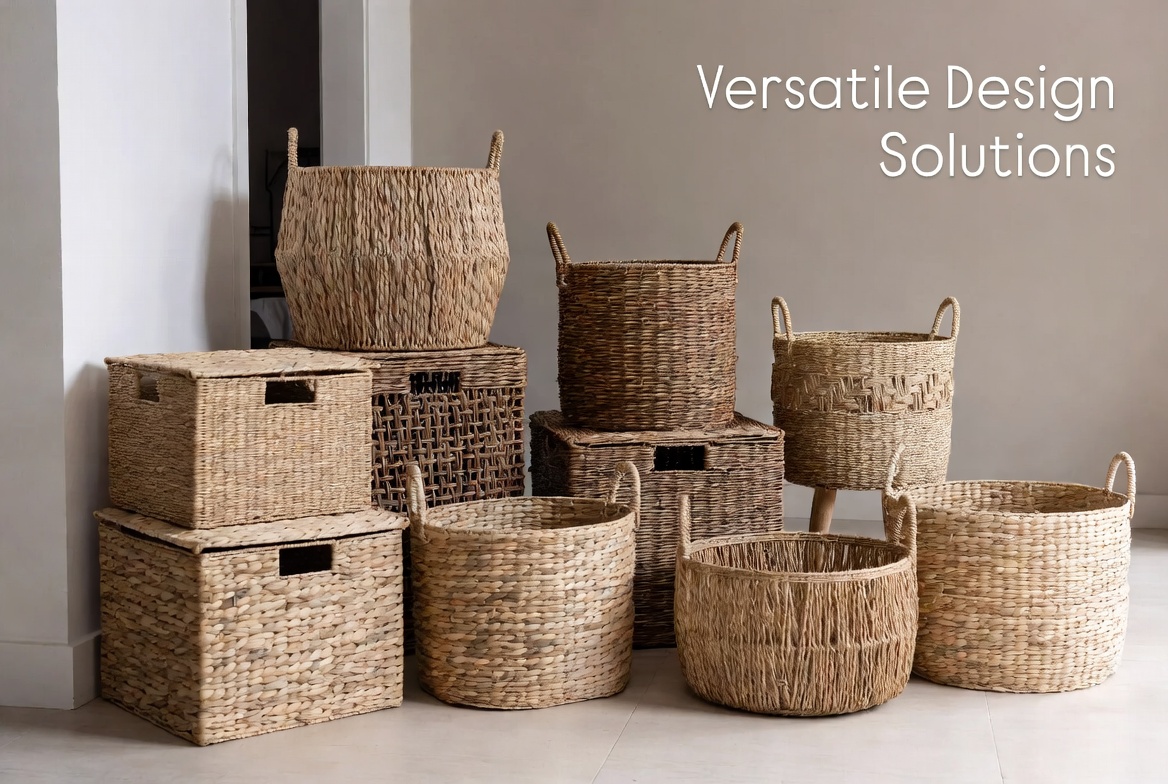
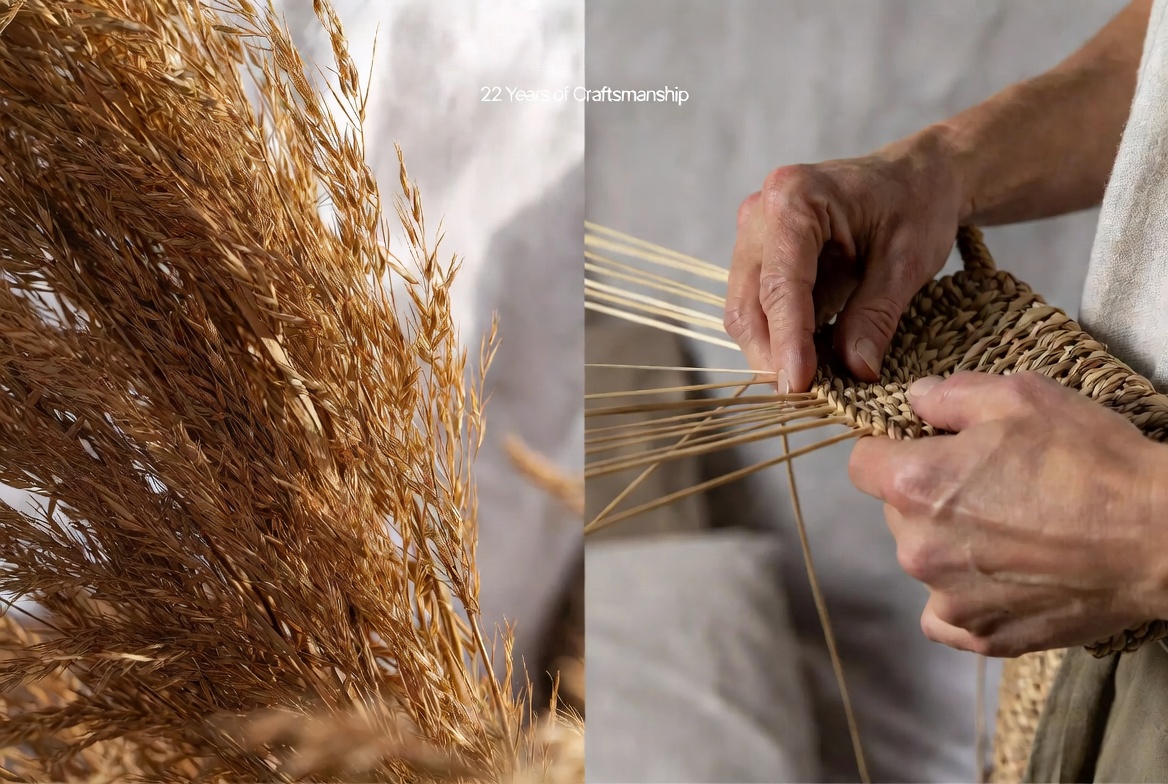
Company Profile: Established in 2004 and headquartered in Nanning, Guangxi, HNL Co., Ltd. represents the benchmark for mid-sized manufacturers serving both SME brands and major retailers. With 22 years of operational history, the company specializes in handwoven products using seagrass, water hyacinth, rattan, fern, bamboo, plastic imitation rattan, paper rope, and weaving tape. [made-in-china]
Core Advantages:
- GACC Class A Management Enterprise certification for multiple consecutive years, indicating top-tier customs compliance and export reliability [made-in-china]
- Qualified supplier for global retailers including Walmart and Tesco, demonstrating scalability and quality consistency [made-in-china]
- R&D team producing hundreds of new designs annually, supporting rapid product iteration for trend-responsive buyers [made-in-china]
- Flexible OEM/ODM services with low communication friction—ideal for brands requiring customization without enterprise-scale order volumes [made-in-china]
- Strategic location in Nanning provides direct access to ASEAN raw material markets and cost-competitive labor pools [made-in-china]
Best For: International buyers seeking responsive communication, design flexibility, and proven retail supply chain experience without the rigid MOQs typical of factory-direct mega-manufacturers. [made-in-china]
Product Range: Storage baskets, organization systems, kitchen/bathroom accessories, garden planters, home décor pieces, and gift packaging solutions across natural and synthetic materials. [made-in-china]
Company Profile: Operating since 2008 with dual factory infrastructure in Bobai County, S.D. Import & Export maintains 2,000 square meters of production space focused on rattan, fern, bamboo, seagrass, chipwood, paper-rope, water hyacinth, banana-leaf, wire, and metal basket combinations. [gxsd.goldsupplier]
Core Advantages:
- Multi-material production capabilities enabling product line diversification under single sourcing relationships
- Strategic Bobai County location within three hours of Nanning's international trade hub, optimizing logistics efficiency [gxsd.goldsupplier]
- Established presence in China-ASEAN Free Trade Area with preferential export treatment
Best For: Buyers requiring mixed-material orders or seeking to consolidate multiple basket categories with one manufacturer.
Company Profile: Sales office for Duan Weaving Town Rattan Basket Handicraft Factory, specializing in garden planters and outdoor garden supplies. [nnsunflower]
Core Advantages:
- Niche expertise in weather-resistant seagrass basket treatments for outdoor applications
- Integration with rattan basket production for complementary product offerings [nnsunflower]
- Qingxiu District location provides modern office infrastructure alongside traditional manufacturing
Best For: Garden centers, landscaping suppliers, and outdoor décor retailers requiring specialized weather-resistant treatments.
Company Profile: Bobai County hosts China's densest concentration of small-to-medium handwoven basket manufacturers, with over 50 specialized facilities within a 30-kilometer radius. [gxsd.goldsupplier]
Core Advantages:
- Competitive pricing through localized supply chain competition and shared material sourcing networks
- Rapid prototyping capabilities as design concepts can be cross-referenced among multiple artisan workshops
- Traditional craftsmanship preservation with generational weaving knowledge transfer
Best For: Price-sensitive buyers willing to invest time in supplier vetting and relationship development within cluster ecosystems.
Company Profile: Henan-based manufacturer offering factory-direct natural seagrass wicker storage and fruit baskets with Southeast Asian styling. [yuandahandicrafts.en.made-in-china]
Core Advantages:
- Northern China production base provides alternative logistics routing through Tianjin and Qingdao ports
- Specialization in storage and functional baskets rather than purely decorative items [yuandahandicrafts.en.made-in-china]
- Water hyacinth integration capabilities for blended-material products [yuandahandicrafts.en.made-in-china]
Best For: Buyers seeking geographic supply chain diversification beyond Guangxi Province concentration.
Company Profile: Cluster of 15-20 manufacturers in the 50-200 employee range, typically unlisted on major B2B platforms but accessible through trade show connections and referral networks.
Core Advantages:
- Higher customization flexibility than large-scale factories
- Willingness to accommodate intellectual property protection agreements and exclusivity arrangements
- Often family-owned with multi-generational weaving expertise and quality-focused production cultures
Best For: Brands developing proprietary designs requiring confidentiality and manufacturing exclusivity.
Company Profile: Approximately 8-10 manufacturers in Guangxi and Zhejiang provinces capable of producing 10,000+ seagrass baskets monthly across multiple SKUs.
Core Advantages:
- Economies of scale enabling 15-25% lower unit costs on orders exceeding 5,000 pieces
- Advanced quality control systems with statistical process control (SPC) implementation
- Dedicated export departments with multi-language support and LC payment term acceptance
Best For: Major retailers, supermarket chains, and distribution companies requiring high-volume consistency and predictable pricing.
Company Profile: Network of cooperative workshops in rural Guangxi specializing in museum-quality handwoven seagrass baskets using traditional techniques.
Core Advantages:
- Superior craftsmanship with intricate weaving patterns unavailable from industrial manufacturers
- Fair-trade certification options and artisan storytelling for brand differentiation
- Customization capabilities extending to bespoke sizing and historical design reproduction
Best For: Luxury home décor brands, boutique retailers, and museum gift shops prioritizing craftsmanship over cost optimization.
Company Profile: Emerging category of manufacturers integrating seagrass with metal frames, plastic reinforcements, and treated coatings for enhanced durability.
Core Advantages:
- Product innovation addressing traditional seagrass basket limitations (weight capacity, moisture resistance)
- CE and RoHS certification compliance for European market requirements [alibaba]
- Patent portfolios protecting design innovations and processing techniques
Best For: Buyers targeting commercial applications (retail displays, hospitality) requiring durability beyond traditional handwoven limits.
Company Profile: Rare manufacturers controlling seagrass cultivation, harvesting, processing, weaving, and export—typically 3-5 operations in Guangxi Province.
Core Advantages:
- Complete supply chain transparency enabling organic and sustainable certification
- Material consistency eliminating third-party sourcing variability
- Cost stability through raw material price insulation
Best For: Sustainability-focused brands requiring comprehensive supply chain documentation and environmental impact reporting.
| Manufacturer Type | Typical MOQ | Lead Time | Customization Level | Key Certification | Price Positioning |
|---|---|---|---|---|---|
| HNL Co., Ltd. | 500-1,000 units | 30-45 days | High (R&D team) | GACC Class A | Mid-range |
| S.D. Import & Export | 1,000-2,000 units | 35-50 days | Medium-High | ISO 9001 | Mid-range |
| Sunflower Trade Co. | 800-1,500 units | 30-40 days | Medium | FSC | Mid-range |
| Bobai Cluster SMEs | 300-800 units | 25-35 days | Very High | Varies | Budget-Mid |
| Large Export Factories | 5,000+ units | 45-60 days | Low-Medium | ISO 9001/14001 | Budget |
| Artisan Cooperatives | 100-500 units | 45-90 days | Very High | Fair Trade | Premium |
| Hybrid Innovators | 1,000-3,000 units | 40-55 days | Medium | CE/RoHS | Mid-Premium |
| Vertical Operations | 2,000-5,000 units | 50-70 days | Low-Medium | Organic/FSC | Mid-Premium |
Seagrass quality directly impacts product durability, aesthetics, and pricing. Professional buyers should specify material grades in purchase agreements: [globalsources]
Grade A (Premium): Uniform fiber diameter (2-3mm), consistent coloring, minimal breakage during weaving, harvested at optimal maturity (8-10 months growth). Suitable for retail display products and high-touch applications. Price premium: 25-40% above standard grades.
Grade B (Standard): Slight color variation acceptable, fiber diameter range 2-4mm, minor cosmetic imperfections allowed. Appropriate for functional storage products and gift packaging. Industry baseline pricing.
Grade C (Economy): Color inconsistency, mixed fiber diameters, visible node imperfections. Used for industrial packaging, temporary displays, and cost-sensitive bulk applications. Discount: 20-30% below standard.
Quality degradation typically occurs at five manufacturing stages that buyers should audit:
1. Pre-Treatment: Seagrass must be dried to 12-15% moisture content to prevent mold growth. Request moisture meter readings in factory inspections.
2. Dyeing (if applicable): AZO-free dyes required for EU/US markets. Verify test reports for each color SKU, not just product line certifications.
3. Weaving Tension: Inconsistent tension creates structural weak points. Examine sample batches for uniform basket rigidity when inverted.
4. Edge Finishing: Wire or rattan reinforcement quality determines handle attachment durability. Specify gauge requirements in technical specifications.
5. Final Treatment: Food-safe coating requirements for kitchen baskets; UV-resistant treatments for outdoor products. Request MSDS (Material Safety Data Sheets) for all chemical treatments.
A widespread but rarely discussed practice among low-tier manufacturers involves "double weaving"—using two thin, inferior seagrass strands twisted together to mimic single-strand premium material. This reduces material costs by 30-40% while maintaining superficial appearance in pre-shipment samples. Detection method: Unravel a 5cm section of the sample basket's base. Genuine single-strand weaving shows uniform fiber core; double-weaving reveals two distinct strands twisted together. Specify "single-strand weaving only" in purchase contracts and conduct random batch inspections upon delivery. [gxsd.goldsupplier]
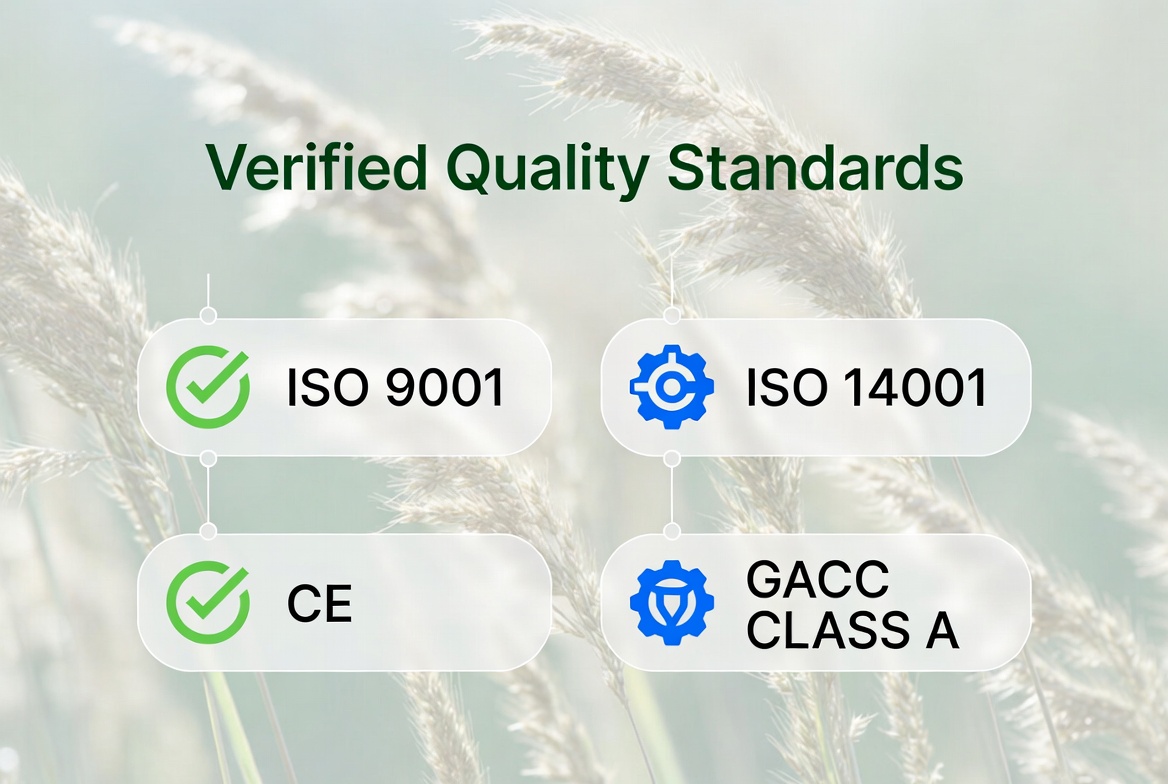
ISO 9001:2015 certification indicates systematic quality control processes including documented procedures, corrective action protocols, and continuous improvement frameworks. Verification steps: [globalsources]
- Request certificate copy with current validity dates (3-year cycle with annual surveillance audits)
- Confirm certification body legitimacy through International Accreditation Forum (IAF) database
- Ask for recent audit reports highlighting non-conformities and corrective actions
Environmental certification demonstrates waste management systems, energy efficiency programs, and pollution control measures. Particularly relevant for buyers with corporate sustainability commitments. Key questions: [globalsources]
- What percentage of production wastewater is recycled?
- Are natural dyes sourced from sustainable harvesting?
- How is seagrass cultivation waste repurposed?
Required for seagrass baskets sold in European Economic Area markets, CE marking addresses safety standards while RoHS restricts hazardous substances in manufacturing. Common compliance gaps: [facebook]
- Wire basket frames may contain excessive lead or cadmium without RoHS testing
- Dye formulations using restricted phthalates
- Coating chemicals exceeding volatile organic compound (VOC) limits
Request third-party test reports from accredited laboratories (SGS, TÜV, Intertek) rather than accepting manufacturer self-declarations.
When seagrass baskets incorporate bamboo or rattan structural elements, Forest Stewardship Council (FSC) certification ensures sustainable forestry practices. Chain-of-custody documentation should trace materials from forest to finished product. [woodenoutdoorfurniture.com]
China's General Administration of Customs assigns Class A status to fewer than 5% of registered exporters based on compliance history, financial stability, and operational transparency. Benefits to buyers: [made-in-china]
- Expedited customs clearance reducing shipment delays
- Lower inspection rates indicating consistent quality history
- Financial stability reducing supplier bankruptcy risk mid-contract
Verify current status through China Customs website (english.customs.gov.cn) using company registration number. [english.customs.gov]
Phase 1: Document Review (Week 1)
- Business license with current annual inspection stamp
- Export license verification through GACC database
- Quality system certificates with validity confirmation
- Client reference list with contact information (minimum 5 references)
- Production capacity declaration with evidence (equipment list, workforce size)
Phase 2: Remote Assessment (Week 2-3)
- Video factory tour covering raw material storage, production floor, quality control area, and finished goods warehouse
- Sample request with specific technical requirements (dimensions, material grade, finish specifications)
- Quote analysis including per-unit cost breakdown, tooling/mold fees, shipping estimates, and payment terms
Phase 3: On-Site Audit (Week 4-5)
For orders exceeding $50,000, in-person factory inspection becomes cost-effective:
- Raw material storage conditions (moisture control, pest prevention, inventory turnover)
- Equipment maintenance logs and calibration certificates for quality instruments
- Worker training records and safety protocols
- Subcontractor disclosure (many factories outsource weaving to home workshops—assess quality control over distributed production)
Request three sample tiers to assess manufacturer's range capabilities:
1. Standard Production Sample: Off-the-shelf design demonstrating baseline quality
2. Custom Design Sample: Modified specification to test design interpretation and communication
3. Quality Stress Sample: Intentionally challenging specification (e.g., extra-large size, mixed materials, complex pattern) revealing problem-solving capabilities
Conduct physical testing:
- Load Test: Fill basket to 150% intended capacity for 48 hours; examine for deformation
- Moisture Resistance: Spray interior with water mist; check for mold growth after 7 days in sealed container
- Handle Durability: Lift loaded basket 50 times; inspect attachment points for stress fractures
- Finish Integrity: Rub white cloth across dyed surfaces; assess color transfer indicating inadequate dye fixation
Standard payment structures for seagrass basket orders:
New Supplier Relationship:
- 30% deposit upon order confirmation
- 70% balance against Bill of Lading copy or before shipment
- Use Letter of Credit (LC) for orders exceeding $30,000 to ensure quality compliance before final payment
Established Relationship (3+ successful orders):
- 30% deposit upon order confirmation
- 60% against pre-shipment inspection approval
- 10% balance within 30 days of delivery
Risk Mitigation Tools:
- Third-party inspection services (SGS, Bureau Veritas, TÜV) costing $300-500 per inspection preventing costly defect shipments
- Trade assurance programs through Alibaba.com protecting payments up to coverage limits
- Marine insurance covering minimum 110% of cargo value (CIF pricing should include insurance)
Container Loading Optimization:
Seagrass baskets' irregular shapes create loading inefficiencies. Professional manufacturers provide:
- Nesting designs reducing cubic volume by 40-60%
- Custom carton sizing maximizing container cube utilization
- Loading plans diagramming carton placement before production begins
Standard 40' High Cube container capacities:
- Small baskets (15-25cm diameter): 15,000-25,000 units
- Medium baskets (30-40cm diameter): 8,000-12,000 units
- Large baskets (45-60cm diameter): 3,000-5,000 units
Shipping Season Considerations:
Guangxi manufacturers face production constraints during Chinese New Year (late January-February) and peak harvest seasons (June-August when seagrass quality peaks). Order placement timing:
- Q1 Delivery: Place orders by mid-November
- Q2 Delivery: Place orders by late February
- Q3 Delivery: Place orders by early May
- Q4 Delivery: Place orders by late July
Pre-booking shipping containers 4-6 weeks before production completion prevents port congestion delays common in Guangxi's smaller export terminals.
Effective manufacturer relationships require overcoming language and cultural barriers:
Technical Specifications:
- Provide dimensioned drawings (not just photos) with tolerance ranges
- Specify materials by scientific names (Lepironia articulata for gray seagrass; Cyperus malaccensis for brown seagrass) avoiding regional naming confusion
- Use Pantone color references for dyed products rather than descriptive terms
- Include negative specifications ("no metal staples in construction") to prevent unintended cost-cutting
Cultural Considerations:
- Chinese manufacturers interpret silence as agreement; explicitly request written confirmation of changes
- "Yes" often means "I understand" rather than "I agree"—follow up with recap emails
- Direct criticism causes relationship damage; frame quality issues as "opportunities for improvement"
- Establish primary contact person rather than rotating communication across sales team
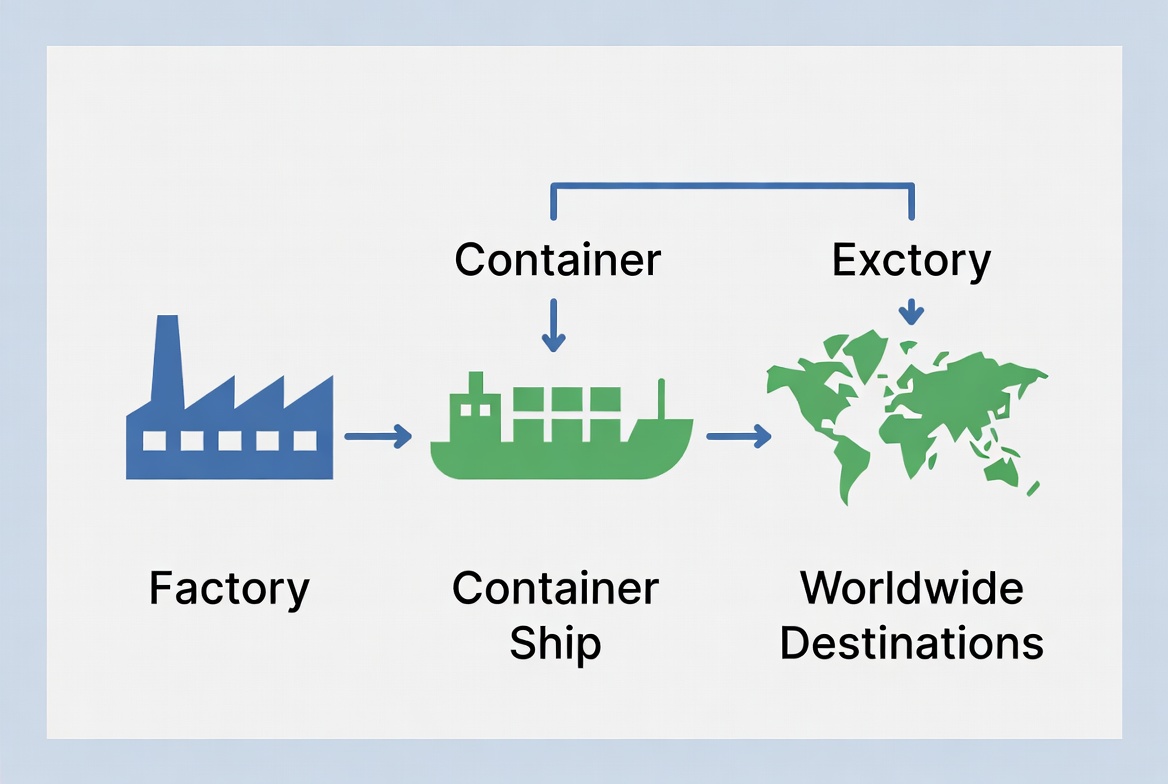
Scenario: Approved samples use Grade A seagrass; bulk production receives Grade B-C mixed grades to increase profit margins.
Prevention:
- Retain approved sample with manufacturer and buyer retaining duplicate
- Include material grade specifications in purchase contract with penalty clauses
- Conduct pre-shipment inspection comparing production units to approved sample
- Request photo documentation of raw materials before weaving begins
Scenario: Manufacturer provides outdated ISO certificate copies or documents from different legal entities within corporate group.
Prevention:
- Verify certificate authenticity directly with certification body using certificate number
- Confirm legal entity name on certificate matches company name on business license and purchase contract
- Request most recent audit report (annual surveillance audits required for ISO maintenance)
- Check certification body accreditation status through IAF or national accreditation body
Scenario: Manufacturer outsources 60-80% of production to unvetted home workshops, creating quality inconsistency and intellectual property risks.
Prevention:
- Include "no subcontracting without written approval" clause in contracts
- Request workforce documentation (direct employees vs. contract workers)
- Conduct unannounced factory visits observing actual production scale vs. claimed capacity
- Implement unique product markings (hidden tags, specific weaving patterns) enabling production source tracing
Scenario: Manufacturer minimizes packaging costs; baskets arrive crushed, deformed, or with finish damage from friction.
Prevention:
- Specify packaging requirements including inner poly bags, corner protectors, and carton burst strength (minimum 200 lbs for export cartons)
- Request packaging samples and drop-test documentation
- Include packaging photos in pre-shipment inspection protocol
- Factor 3-5% damage allowance into order quantities for cushion against minor transit issues
Scenario: Custom designs provided for quotation appear on manufacturer's website or competitor catalogs within months.
Prevention:
- Execute Non-Disclosure Agreements (NDAs) before sharing proprietary designs, understanding enforcement limitations in China
- Segment design information across multiple suppliers (Pattern A with Manufacturer X; Handle Design B with Manufacturer Y) preventing complete design replication
- Register design patents in China through China National Intellectual Property Administration (CNIPA) providing legal recourse
- Build relationships with manufacturers serving non-competing markets (geographic exclusivity agreements)
Environmental consciousness drives 34% year-over-year growth in sustainably certified seagrass basket demand according to 2026 market analysis. Manufacturers investing in organic certification, carbon-neutral production processes, and circular economy initiatives gain competitive advantages with eco-focused retailers and conscious consumers. [keico.com]
Traditional all-natural seagrass baskets face competition from hybrid designs incorporating recycled plastics, metal frameworks, and weather-resistant coatings. These innovations address functional limitations while maintaining aesthetic appeal—particularly valuable for outdoor furniture and commercial display applications requiring durability beyond natural fiber capabilities. [alibaba]
Geopolitical tensions and tariff uncertainties drive some buyers to diversify beyond China-exclusive sourcing. Vietnam, Indonesia, and Bangladesh emerge as complementary suppliers, though China's infrastructure advantages, production scale, and established export systems maintain dominant market position for volume buyers. [elibrary.imf]
Leading manufacturers implement blockchain-based supply chain tracking, QR code product authentication, and digital twin quality documentation systems. These technologies address transparency demands from sustainability-focused brands and enable rapid product recall capabilities when quality issues emerge. [china-briefing]
Ready to source premium seagrass baskets from verified Chinese manufacturers? Contact HNL Co., Ltd. directly for factory tour arrangements, custom sample development, and detailed quotations at Linda@hnl.gx.cn or call 0086-139 7869 9600. Our 22-year track record and GACC Class A certification ensure quality consistency from first sample to final shipment. [made-in-china]
How can I verify if a manufacturer's ISO 9001 certification is legitimate and current?
Request the complete certificate including certification body name, certificate number, issue date, and expiry date. Contact the certification body directly (contact information available on their website) providing the certificate number for verification. Legitimate certifications undergo annual surveillance audits—request the most recent audit report showing conformities and non-conformities addressed. Cross-reference the legal entity name on the certificate with the company's business license; certificates issued to parent companies don't automatically cover subsidiary manufacturing facilities. Check the certification body's accreditation status through the International Accreditation Forum (IAF) database at iaf.nu to confirm they're authorized to issue ISO certifications. [globalsources]
What's the real difference between FOB, CIF, and EXW pricing for seagrass baskets, and which should I choose?
EXW (Ex Works) means you handle all transportation from the factory gate, providing maximum control but requiring established freight forwarding relationships in China—typically 8-12% cheaper than FOB but adds logistics complexity. FOB (Free on Board) includes domestic transportation to port and export customs clearance, with you arranging ocean freight and destination customs—industry standard for experienced importers. CIF (Cost, Insurance, and Freight) includes ocean shipping and marine insurance to your destination port, simplifying logistics but reducing shipping carrier control—premium of 15-25% over FOB pricing. First-time importers should use CIF for simplicity; experienced buyers with freight forwarder relationships benefit from FOB cost optimization; EXW only makes sense for consolidation with other Chinese products or special logistics requirements. [china-briefing]
How do I calculate realistic Minimum Order Quantities (MOQ) for custom seagrass basket designs?
MOQs reflect tooling costs, material purchasing economics, and production line setup time rather than arbitrary manufacturer preferences. For completely custom molds/patterns, manufacturers incur $800-2,000 in development costs requiring 1,000-2,000 unit runs for cost recovery. Modified existing designs (changed dimensions, color variations) require 500-800 units. Standard catalog items with your branding accept 300-500 unit minimums. Reduce effective MOQs through mixed container strategies: order 500 units each of 4-6 similar designs reaching manufacturer's minimum while diversifying your product line. Negotiate lower initial MOQs (300-400 units) for test market orders with commitment to larger subsequent orders if products succeed—manufacturers accept lower margins on first orders to establish relationships. [gxsd.goldsupplier]
What should I look for during a factory audit that manufacturers don't want buyers to see?
Inspect the raw material storage area for seagrass quality segregation—premium manufacturers physically separate Grade A, B, and C materials preventing accidental mixing; poor performers store everything together suggesting inconsistent quality control. Check production floor for in-process inventory age; baskets sitting partially completed for weeks indicate capacity overselling or workflow bottlenecks. Examine the quality rejection area (every factory has one); excessive rejected finished goods (>5% of daily production) signals systemic problems. Request access to subcontractor lists—resistance indicates hidden outsourcing. Review shipping records for other clients noting damage claim frequency; manufacturers hesitate to show high return rates. Inspect worker living conditions if on-site dormitories exist; poor conditions correlate with high turnover destroying craftsmanship consistency. [xlfiber]
What are the actual lead times for seagrass baskets, and what causes delays?
Standard lead times span 30-45 days: 3-5 days order processing and material procurement, 15-20 days production for 1,000-5,000 unit runs, 3-5 days quality inspection and packing, 5-7 days domestic transportation to port, plus 2-8 days port handling. Common delay factors include: Raw material shortages during off-season months (November-March) when seagrass quality degrades adding 7-14 days for sourcing. Chinese New Year factory closures (late January-February) stopping production entirely for 2-3 weeks. Custom color dye lot approval cycles adding 5-10 days for sample submission and approval iterations. Port congestion at smaller Guangxi terminals (Beihai, Fangchenggang) during peak shipping seasons adding 5-12 days versus major ports. Add 15% time buffer to quoted lead times for realistic planning; request weekly production progress photos for orders exceeding $20,000 to catch delays early. [tradingeconomics]
1. General Administration of Customs China (GACC). (2026). "China Customs Statistics - Import and Export Data." Retrieved from http://english.customs.gov.cn/Statistics/Statistics [english.customs.gov]
2. Trading Economics. (2026). "China Exports - April 2026 Record High of USD 359.44 Billion." Retrieved from https://tradingeconomics.com/china/exports [tradingeconomics]
3. China-CEE Institute. (2026). "Review of China's Foreign Trade in 2025 and Outlook for 2026: Observing Its Resilient Breakthrough." Retrieved from https://china-cee.eu/2026/03/23/review-of-chinas-foreign-trade-in-2025-and-outlook-for-2026 [china-cee]
4. XL Fiber. (2022). "Guangxi Accelerates the Development of Textile and Garment Industry Cluster to Connect with ASEAN." Retrieved from http://www.xlfiber.com/NewsInfo-829.html [xlfiber]
5. China Briefing. (2026). "China's Import-Export in 2025: Trade Resilience and Challenges." Retrieved from https://www.china-briefing.com/news/chinas-import-export-2025/ [china-briefing]
6. KEICO. (2026). "The 2026 Guide to Seagrass Baskets: Why Sustainable Decor is Leading the Global Market." Retrieved from https://keico.com.vn/the-2026-guide-to-seagrass-baskets-why-sustainable-decor-is-leading-the-global-market/ [keico.com]
7. Global Sources. (2026). "ISO 9001:2015 and FSC Certified Indoor Flower Pot and Basket Manufacturers." Retrieved from https://www.globalsources.com/manufacturers/indoor-flower-pot.html [globalsources]
8. HNL Co., Ltd. (2025). "About Us - Handmade Woven Basket Manufacturer." Retrieved from https://www.hnlbasket.com/aboutus.html [made-in-china]