Views: 242 Author: Linda Publish Time: 2026-06-28 Origin: Site


Content Menu
● Understanding Moisture Management in Fruit Displays
● Material Science Basics: How Natural Fibers Handle Moisture
>> How Banana Leaf Behaves with Moisture
>> How Rattan Responds to Moisture
● Expert UX Take: When Banana Leaf Basket Wins, and When Rattan Wins
>> Situations Where Banana Leaf Is the Better Moisture‑Absorbent Base
>> Situations Where Rattan Basket With Liner Is the Better Overall Solution
● Why Retailers and Hospitality Buyers Prefer Breathable Woven Baskets
● HNL Co., Ltd: 22 Years of Expertise in Moisture‑Smart Woven Fruit Baskets
● Real‑World Buyer Feedback: What Users Notice First
● Practical Comparison: Banana Leaf Basket vs. Rattan Basket
● Moisture‑Smart Display Design: Step‑by‑Step Setup for Fresh Fruit
>> Step 1: Choose the Basket Structure
>> Step 2: Add a Moisture‑Absorbent Base Layer
>> Step 3: Arrange Fruit for Both Aesthetics and Ventilation
>> Step 4: Service‑Time Maintenance
● Climate and Logistics: Matching Basket Choice to Your Market
● Expert Recommendation: Best Moisture‑Absorbent Base Strategy
● How HNL Supports B2B Buyers in Fruit Display Programs
● FAQs: Banana Leaf and Rattan Fruit Baskets
Banana leaf baskets and rattan both work for fruit displays, but banana leaf is generally better as a moisture-absorbent base for fresh fruit, while rattan offers superior long‑term structure and visual versatility when combined with liners or synthetic fibers. [thanhcongcraft]
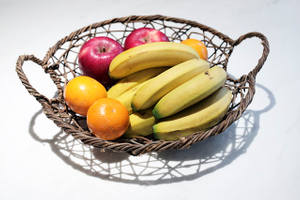
Fresh fruit displays face three core moisture challenges: condensation, juice leakage, and ambient humidity. If that moisture accumulates under the fruit, it accelerates mold, soft spots, and surface blemishes. Choosing the right basket base helps keep fruit dry, visually appealing, and safe during service or retail presentation. [magicbambu]
For professional buyers—hotels, supermarkets, cafés—this is not just an aesthetic concern but a food safety and waste reduction issue. Woven natural materials like banana leaf, bamboo, seagrass and rattan are popular because they breathe, wick moisture, and align with eco‑friendly branding, but they behave very differently under daily use. [hnlbasket]

Banana leaf is a broad, fibrous plant material traditionally used as a food contact surface in many Asian cuisines, precisely because it can absorb surface moisture while still feeling dry to the touch. Its fibers hold a thin film of water and then gradually release it through evaporation, instead of allowing droplets to pool under the fruit. [magicbambu]
When layered or folded as a basket base or liner:
- It wicks away light condensation from chilled or just‑washed fruit. [magicbambu]
- It reduces direct contact between sticky fruit juice and the structural basket below. [magicbambu]
- It offers a natural non‑slip surface, helping keep fruit in stable arrangement. [magicbambu]
The trade‑off is durability: banana leaf is not a long‑term structural material for heavy, repeated loads; it is best used as a replaceable liner or inner basket layer. [magicbambu]
Rattan is a natural climbing palm with an open, breathable fiber structure. This is excellent for everyday storage because the weave lets air circulate, but it also means rattan absorbs moisture rather than repelling it. [thanhcongcraft]
Industry experience shows:
- Brief contact with water is usually harmless if the basket is allowed to dry fully with good airflow. [thanhcongcraft]
- Trapped moisture at the base—especially under fruit trays or dense weaving—can weaken internal fiber bonds and promote mold or odor. [thanhcongcraft]
- Many B2B quality claims around rattan are traced back to extended moisture exposure during shipping or humid storage, not manufacturing defects. [thanhcongcraft]
In practice, natural rattan baskets are excellent for ventilated fruit storage, but they must be protected from standing moisture, for example by using liners or moisture‑absorbing inserts. [thanhcongcraft]
From a practical, UX‑driven point of view, a banana leaf basket or banana leaf liner tends to be the better choice when:
- Fruit is washed frequently and displayed still slightly damp.
- Displays are short‑term (breakfast buffet, event, daily supermarket island).
- The brand wants a strong natural, farm‑to‑table or tropical visual story.
Banana leaf absorbs light surface moisture and helps keep the fruit bottom relatively dry for the duration of a buffet or service period. At the same time, the leaf adds a fresh, green backdrop that visually amplifies color and perceived freshness. [magicbambu]
For long‑term fixtures—hotel lobby fruit stations, café countertop displays, or grocery islands—the better solution is often rattan baskets combined with moisture‑managing liners: [ehoreca]
- The rattan frame gives stability, stackability and consistent sizing across displays. [alibaba]
- A removable liner (banana leaf, paper, fabric, poly‑rattan tray) isolates moisture from the natural fibers. [ehoreca]
- Staff can swap liners quickly without replacing the entire basket, reducing cost and waste. [thanhcongcraft]
This hybrid approach respects rattan's material limits while leveraging its premium aesthetic and long‑term durability. [alibaba]
Recent industry content around bamboo and rattan fruit baskets highlights three recurring benefits for fresh produce displays: [alibaba]
1. Airflow: Open woven structures allow air to circulate around apples, bananas, citrus and tomatoes, which helps prevent moisture buildup and surface condensation. [magicbambu]
2. Moisture‑Wicking: Natural fibers such as bamboo and banana leaf can absorb light moisture, keeping produce from sitting in its own juice, which delays rot and soft spots. [magicbambu]
3. Eco‑Friendly Branding: Natural woven baskets visually signal sustainability and authenticity, aligning with modern consumers' preference for plastic‑free, reusable display solutions. [hnlbasket]
For supermarkets or bakery corners, this means fewer markdowns due to cosmetic damage, better perceived freshness, and a display that visually communicates quality and care. [magicbambu]
HNL Co., Ltd is a China‑based wholesale woven basket manufacturer with decades of experience in exporting handmade products made from natural and synthetic materials. The company works extensively with seagrass, water hyacinth, rattan, fern, bamboo, as well as plastic imitation rattan, paper rope and tape, allowing tailor‑made solutions for different moisture scenarios. [hnlbasket]
HNL has been certified for many consecutive years as a "Class A Management Enterprise of the People's Republic of China" by Customs, which is a strong signal of compliance, reliability and stable export performance for global B2B buyers. International buyers often highlight craftsmanship, consistency and responsive customization as key reasons for working with HNL on fruit basket programs and other display solutions. [hnl]
From a buyer's perspective, this means you can match the basket material and construction to your specific climate, service style and cleaning routine, instead of relying on generic off‑the‑shelf designs. [hnlbasket]
Long‑term customers and partners regularly comment on several UX‑critical aspects of HNL's woven products: [hnl]
- Attention to detail in weaving, with clean joins and smooth surfaces that look premium on buffet tables and retail islands.
- Structural stability even for larger fruit baskets, reducing wobble on glass or metal display surfaces.
- Consistent color tone and finishing, which matters when rolling out baskets across multiple venues or store formats.
For fresh fruit displays, they also note that correctly chosen liners and base materials from HNL reduce visible moisture problems and keep fruit looking "just arranged" for longer periods. This qualitative feedback aligns with the material science described above: properly designed natural‑fiber baskets can support both moisture management and visual storytelling when matched to the use case. [hnl]
Below is a practical comparison table that B2B buyers and merchandisers can use when choosing between banana leaf basket and rattan basket as the base for fresh fruit displays. [hnlbasket]
| Aspect | Banana Leaf Basket Base | Rattan Basket Base |
|---|---|---|
| Moisture absorption | High surface absorption; good for brief service periods and damp fruit. (magicbambu) | Absorbs moisture into fibers; safe for short exposure but risk if base stays wet. (thanhcongcraft) |
| Airflow around fruit | Moderate airflow; depends on basket design, often used as liner inside other baskets. (magicbambu) | Strong airflow due to open weave; excellent for long‑term ventilated storage. (thanhcongcraft) |
| Structural durability | Limited structural strength; best used as replaceable liner or decorative base. (magicbambu) | High durability and load‑bearing capacity when kept dry and ventilated. (thanhcongcraft) |
| Cleaning & maintenance | Leaf liners usually discarded and replaced; low cleaning effort but high turnover. (magicbambu) | Basket can be wiped and air‑dried; requires moisture management to avoid mold. (thanhcongcraft) |
| Visual storytelling | Strong natural, tropical, farm‑to‑table aesthetic; highlights freshness. (magicbambu) | Timeless, premium, boho or rustic look; fits hotels, cafés, supermarkets. (thanhcongcraft) |
| Best use case | Short‑term displays, buffets, photo‑friendly promotions with daily setup. (magicbambu) | Long‑term fixtures with liners; central retail islands, room‑service setups. (thanhcongcraft) |
To help you translate material theory into daily practice, here is a simple, repeatable setup for a moisture‑smart fresh fruit display using baskets supplied by HNL.
1. Select a rattan, bamboo, seagrass or poly‑rattan basket in the size and shape that fits your counter or buffet line. [hnlbasket]
2. For environments with high humidity (coastal regions, long damp seasons), prefer breathable designs with open weave to maximize airflow. [thanhcongcraft]
1. Line the basket base with banana leaf, absorbent paper, or a tailored woven mat to capture condensation and light juice leakage. [hnlbasket]
2. In high‑traffic locations, prepare pre‑cut replacement liners, so staff can swap them quickly during service windows. [magicbambu]
1. Place heavier fruits (pineapples, melons) at the back or center and avoid compressing softer fruits like berries directly against the base. [magicbambu]
2. Leave small gaps between fruit groups to allow air circulation; tightly packed displays trap moisture and accelerate spoilage. [magicbambu]
1. At regular intervals, spot‑check the base: if the liner feels damp or shows visible juice, replace it. [magicbambu]
2. After service, remove remaining fruit, dry the basket thoroughly in a ventilated area, and never stack damp baskets to avoid mold. [thanhcongcraft]
This workflow optimizes both customer perception of freshness and back‑of‑house efficiency, while respecting the moisture behavior of natural fibers. [thanhcongcraft]
Moisture risk is not the same in every region, so the "best" basket base changes slightly depending on climate and logistics. [thanhcongcraft]
- United States, coastal and southern regions: High humidity makes moisture retention a concern; buyers often use climate‑controlled storage and moisture‑absorbing liners with rattan baskets. [thanhcongcraft]
- European Union, long damp seasons: Importers pay attention to kiln drying, breathable packaging and acclimation periods before distribution; well‑ventilated rattan or bamboo baskets with liners perform best. [thanhcongcraft]
- Middle East, dry climates: End‑use is favorable, but transit condensation can be an issue; sealed containers and desiccants help keep baskets dry before they reach the store. [thanhcongcraft]
HNL's broad material portfolio lets buyers mix banana leaf, rattan, bamboo and synthetic fibers to match these climate‑specific challenges while still meeting aesthetic and branding needs. [hnlbasket]
From a combined material, UX and operational perspective, the most robust solution for fresh fruit displays is usually:
- Use rattan or similar woven baskets as the primary structural element for airflow, stackability and visual appeal. [hnlbasket]
- Add a replaceable banana leaf or absorbent liner as the front‑line moisture‑absorbent base directly under the fruit. [magicbambu]
- In very wet or food‑service‑intensive applications, consider poly‑rattan or non‑porous inserts that mimic natural rattan visually but resist moisture and are easier to sanitize. [ehoreca]
This approach balances moisture control, durability, hygiene and branding—and it can be scaled cost‑effectively across hotel groups, retail chains and catering operations using HNL's OEM and customization capabilities. [ehoreca]
HNL's long experience as a wholesale woven basket manufacturer gives buyers several practical advantages when designing moisture‑smart fruit displays: [hnlbasket]
- Material consulting: Guiding buyers toward the right mix of banana leaf, rattan, bamboo, seagrass and synthetics for their climate and service style. [hnlbasket]
- Custom sizing and shapes: Matching basket footprints to existing fixtures, refrigerated wells and buffet counters. [hnlbasket]
- Consistent export quality: Supported by Class A Management Enterprise certification and long‑standing customs compliance. [b2bmap]
For hospitality groups, supermarkets and brand agencies, this means you can standardize your display concept globally while still adapting moisture‑management details at the material level. [hnlbasket]
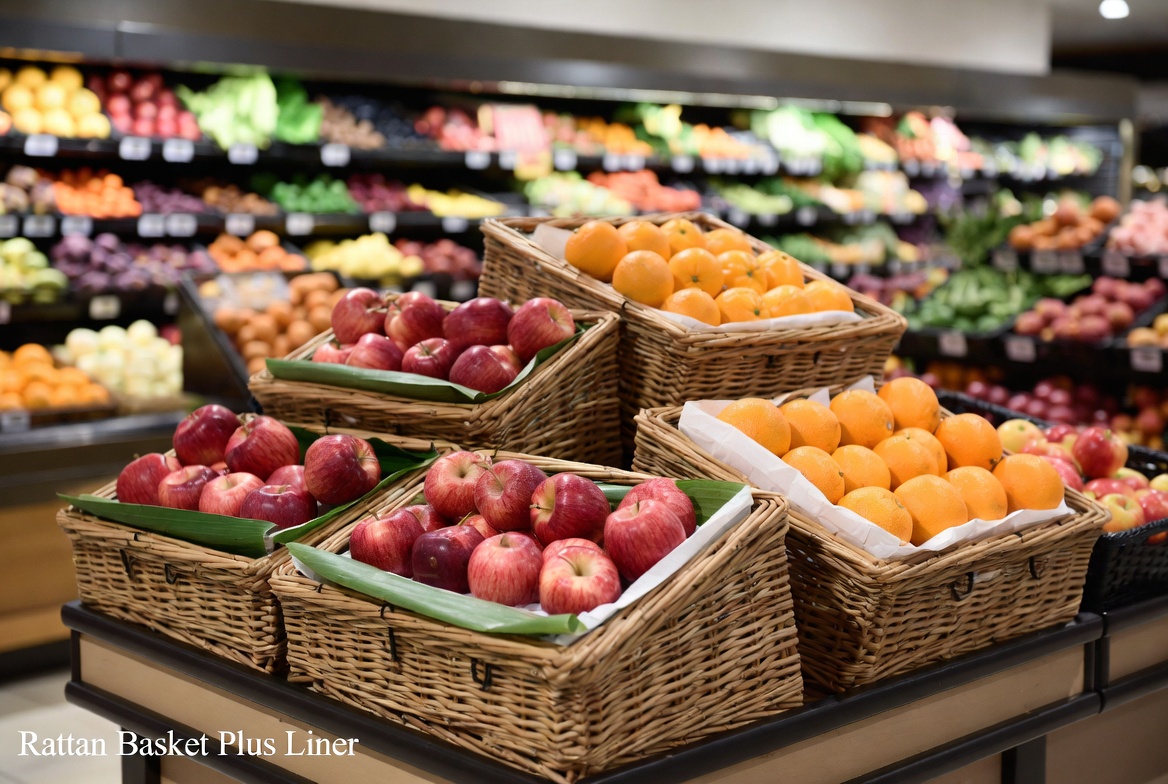
If you are planning or upgrading fresh fruit displays for hotels, supermarkets, cafés or brand activations, consider combining HNL's rattan or bamboo baskets with banana leaf or customized liners to achieve the best moisture‑absorbent performance and visual impact. Contact HNL's team to discuss basket sizes, liner options and material combinations tailored to your climate, service style and branding needs. [hnlbasket]
Q1: Are banana leaf baskets safe for direct fruit contact?
Yes, banana leaf has a long tradition as a food‑contact surface and is widely used to serve fresh produce and cooked dishes, provided it is clean and handled hygienically. [magicbambu]
Q2: Can natural rattan baskets hold wet fruit without damage?
They can tolerate brief moisture, but if the base stays wet, fibers may weaken and mold or odor can develop over time, so liners and proper drying are strongly recommended. [thanhcongcraft]
Q3: How often should I replace banana leaf liners in a buffet fruit display?
In most hotel or café buffets, it is best practice to replace banana leaf liners at least once per service period, or immediately when they become visibly damp or stained. [magicbambu]
Q4: What is the advantage of poly‑rattan baskets for fruit?
Poly‑rattan is non‑porous, resists moisture, does not absorb odors, and is easy to clean, while visually mimicking natural rattan for a consistent, high‑end look. [ehoreca]
Q5: How does HNL ensure quality for exported woven baskets?
HNL combines material selection, skilled manual weaving and strict quality control, and has been recognized repeatedly as a "Class A Management Enterprise" by Chinese Customs, indicating reliable export management. [b2bmap]
1. Thanh Cong Handicraft Co., Ltd. "Can Rattan Baskets Get Wet?" https://thanhcongcraft.com/news-can-rattan-baskets-get-wet/
2. Magic Bambu. "How Bamboo Fruit Baskets Help Keep Your Produce Fresh Longer." https://www.magicbambu.com/news/how-bamboo-fruit-baskets-help-keep-your-produce-fresh-longer/
3. HNL Co., Ltd – Wholesale Woven Basket Manufacturer. https://www.hnlbasket.com
4. HNL – Your Favorite Woven Product Supplier (Customer feedback excerpts). https://www.hnl.ltd
5. B2BMAP – HNL Co. Ltd Company Profile. https://b2bmap.com/hnl-co-ltd
6. Alibaba Product Insights – How To Choose The Best Fruit Basket Rattan Hanging For Your Kitchen. https://www.alibaba.com/product-insights/how-to-choose-the-best-fruit-basket-rattan-hanging-for-your-kitchen.html
7. E‑Horeca – Rectangular Poly Rattan Serving Basket. https://ehoreca.in/cutlery-table-accessories/table-accessories-serviceware/bread-basket/rectangular-poly-rattan-serving-basket/