Views: 292 Author: Linda Publish Time: 2026-07-02 Origin: Site


Content Menu
● Introduction: Why Proper Basket Care Matters
● Understanding Your Basket Materials
>> Natural vs. Synthetic Fibers
>> Why Material Knowledge Matters for Care
● How to Clean Natural Rattan and Wicker Baskets Safely (Step‑by‑Step)
>> Daily and Weekly Dust Removal
>> Special Care for Seagrass, Water Hyacinth and Willow
● Long‑Term Maintenance: Keeping Baskets Looking New
>> Preventing Moisture Damage and Mold
● Preventing Damage: Sunlight, Heat, Weight and Storage
>> Managing Sunlight and Heat Exposure
>> Avoiding Overloading and Deformation
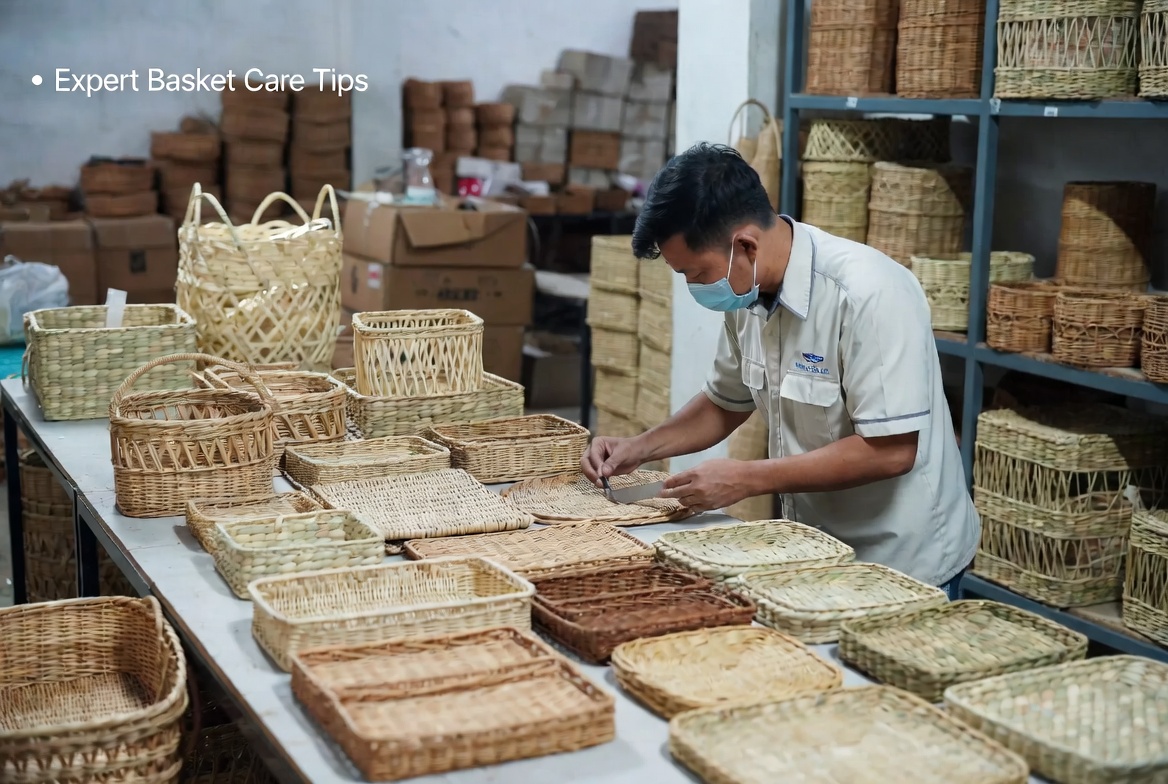
● Expert Insights from a Chinese Woven Basket Factory
>> Material Sourcing and Craft Techniques
>> Natural vs. Synthetic Basket Care: Manufacturer View
● Handling, Repair and When to Replace
>> Minor Repairs and Professional Restoration
>> When Replacement Is the Best Option
● Sustainable and Ethical Considerations
>> Extending Lifespan as a Sustainability Strategy
>> Choosing Between Natural and Synthetic for Longevity
● Synthetic Woven Baskets: Care Tips for Plastic Imitation Rattan and Paper Rope
● Practical Care Checklist for Home Users
● Suggested Table: Care Differences by Material
● Frequently Asked Questions (FAQ)
Natural rattan, wicker, seagrass and other woven baskets have become a must‑have for modern home organization and decor, blending storage function with a warm, crafted aesthetic. As a Chinese factory (HNL Co., Ltd.) with over 22 years of experience in hand‑woven products, we see every day how good care turns a beautiful basket into a long‑lasting, sustainable household tool. [hnl]
We specialize in natural fibers such as seagrass, water hyacinth, rattan, fern and bamboo, as well as synthetic materials including plastic imitation rattan, paper rope, woven tape and plastic. That mix of materials gives us a unique, practical view on how to clean, maintain and store woven baskets so they stay strong, safe and attractive for years. This guide integrates industry know‑how, end‑user feedback and conservation best practices to help you care for both natural and synthetic woven baskets with confidence. [basketgem]
From a maintenance point of view, the first step is to know what your basket is made of. [wovenworldwide]
- Natural plant fibers: rattan, seagrass, water hyacinth, willow, fern, bamboo. [hnlbasket]
- Synthetic or blended fibers: plastic imitation rattan, paper rope, polyester tapes, plastic strips. [hnlbasket]
Natural fibers are breathable and resilient but more sensitive to moisture, UV light and pests, while synthetic fibers are less reactive to humidity yet can deform under heat or heavy loads. Mixed‑material baskets (for example, natural rattan frame plus synthetic bands) require care that respects the most sensitive fiber in the design. [thebasketroom]
Different fibers react differently to water, soap, heat and sunlight. [bashiri.com]
- Rattan: strong and elastic, but can become brittle if overheated or over‑dried, and can swell or warp when soaked. [youtube]
- Seagrass and jute: more prone to mold if left damp, and can lose strength quickly in humid, dark environments. [korissa]
- Plastic imitation rattan: easier to clean with mild soap and water, but can fade or crack under very strong UV exposure. [thebasketroom]
Once you identify your material, you can apply the right cleaning method, set realistic expectations for lifespan, and decide where to place baskets in your home to reduce stress on the fibers. [wovenworldwide]
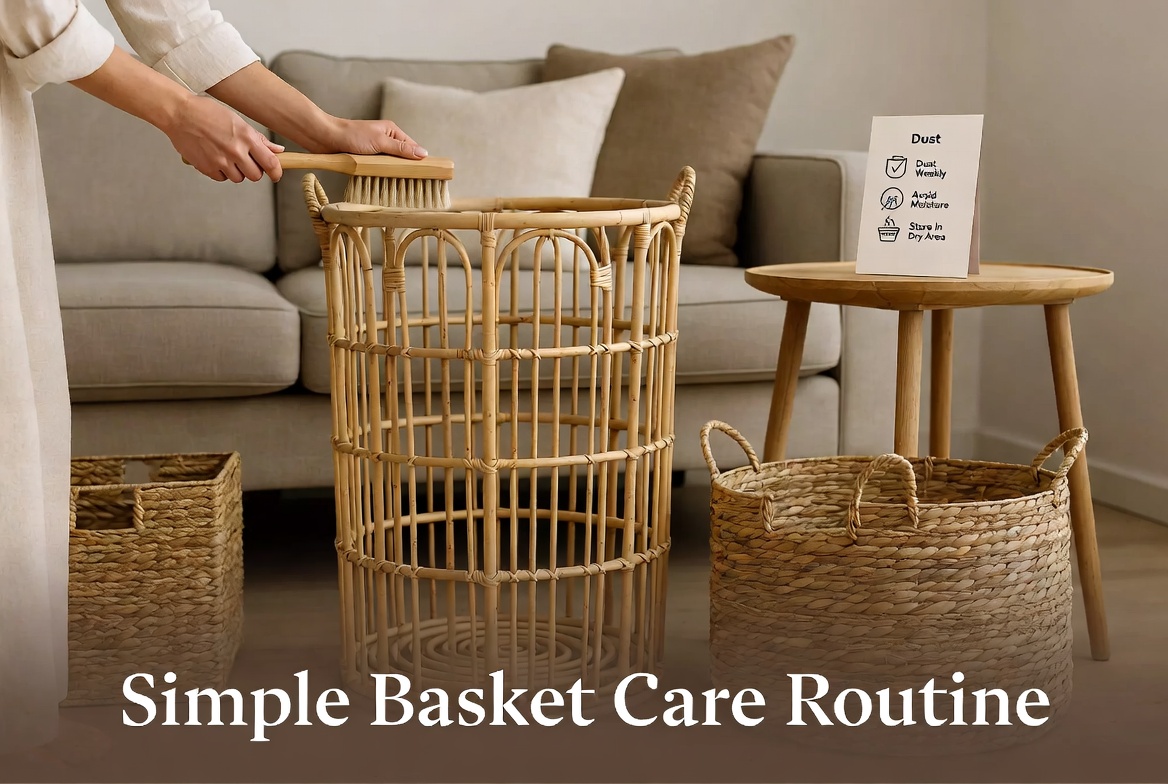
Routine dusting is the foundation of rattan basket care because dust accumulates quickly in woven textures. [bashiri.com]
1. Use a soft, dry brush (natural bristle) or microfiber cloth to follow the direction of the weave.
2. For deeper dust removal, use a vacuum with a brush attachment on low suction. [wovenworldwide]
3. Shake the basket gently outdoors to release loose debris, especially for open‑weave designs. [bashiri.com]
This dry approach protects fibers from unnecessary moisture while keeping surfaces clean and pleasant to touch. [thehenryford]
Water is both a useful tool and a potential risk for natural rattan and wicker. [thebasketroom]
- Prepare a small basin of lukewarm water with a few drops of mild dish soap (pH‑neutral).
- Lightly dampen a soft sponge or cloth; it should never be dripping wet. [hnlbasket]
- Wipe the basket along the weave, paying special attention to handles and rim where fingerprints and oils collect. [youtube]
- For tight corners, use a soft toothbrush with diluted soap to loosen grime. [wovenworldwide]
After cleaning, air‑dry the basket completely in a well‑ventilated space, avoiding strong direct sunlight and high heat sources. Never use a hairdryer or radiator; high heat can make the fibers brittle and cause micro‑cracks over time. [thehenryford]
The original Basket Lady article rightly notes that softer fibers such as seagrass, water hyacinth and willow need gentler cleaning than rattan. [hnlbasket]
For these materials:
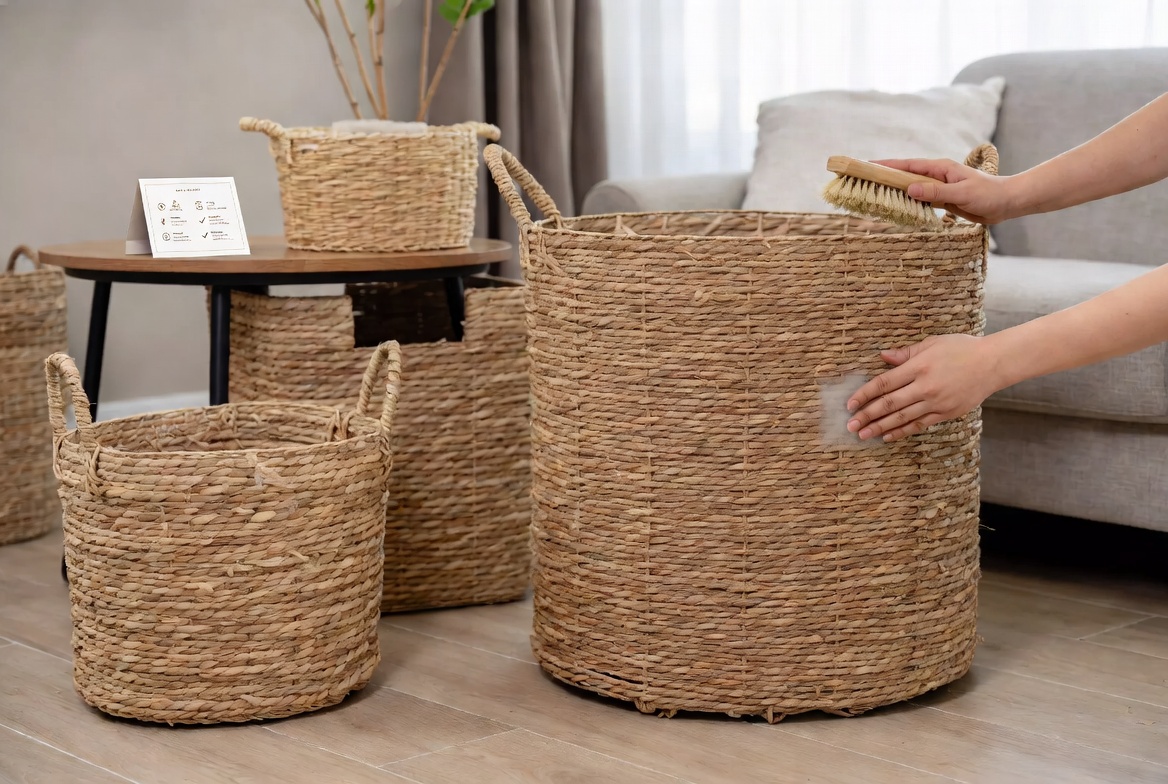
- Prefer dry brushing or vacuuming for routine cleaning. [bashiri.com]
- Use minimal moisture; lightly damp cloth only for spots, not full‑surface wiping. [korissa]
- If the basket gets wet, wipe excess water and let it dry fully in the shade to prevent mold. [korissa]
Jute and seagrass baskets, in particular, should never stay damp for long, as this significantly increases the risk of mildew and fiber weakening. [korissa]
Long‑term woven basket maintenance is about small, consistent habits rather than intensive deep cleans. [wovenworldwide]
- Dust baskets weekly in high‑traffic areas (entryways, living rooms) and monthly in low‑traffic storage spaces. [hnlbasket]
- Inspect handles and rim edges for early signs of fraying so you can fix loose ends before they spread. [canecrafters]
- Rotate baskets between slightly different locations to avoid uneven fading or wear. [thebasketroom]
From our factory experience, baskets used daily for laundry, toys or pantry storage stay attractive years longer when owners commit to this light but regular maintenance routine. [hnl]
Moisture is the leading cause of serious damage in natural woven baskets. [wovenworldwide]
- Keep baskets away from persistently damp floors, steamy bathrooms and windows with condensation.
- If a basket is used in the laundry room or for damp items, line it with fabric or a removable inner container to separate fibers from moisture. [thebasketroom]
- If the basket gets wet, dry it quickly using airflow; wipe with a dry cloth, then allow it to air‑dry in a shaded, ventilated area. [korissa]
For sensitive materials like jute and seagrass, prompt drying is essential to prevent structural weakening and mold growth. This is a point where many users underestimate risk, and where small changes deliver big lifespan gains. [korissa]
Natural materials such as rattan and elephant grass respond strongly to UV exposure and temperature. [thebasketroom]
- Avoid placing baskets under strong direct sunlight for long periods, especially dyed or colored products. [wovenworldwide]
- Keep them away from radiators, fireplaces and heaters; excessive heat dries fibers and increases brittleness. [youtube]
- If you enjoy natural patina and gradual fading, monitor the process to ensure the fibers do not become overly dry or fragile. [bashiri.com]
For synthetic woven baskets, UV exposure mainly affects color and surface texture rather than fiber strength, but you still want to avoid extreme heat that may warp or deform plastic. [bashiri.com]
The original article briefly mentions avoiding heavy loads, and this is worth expanding from a manufacturer point of view. [hnlbasket]
- Respect the intended capacity: laundry baskets, toy storage and trunk baskets are designed with different load expectations. [canecrafters]
- Do not overfill baskets with heavy books, tools or liquids; this can stretch the weave, bend rims and permanently distort the shape. [bashiri.com]
- When moving a basket filled with items, support it from the bottom instead of pulling only on the handles. [youtube]
If a basket does become squashed, many natural fiber products can be reshaped:
- Lightly mist the basket with water.
- Gently mold it back, using a bowl or pot of similar shape as a form. [thebasketroom]
- Allow to dry naturally in the shade, keeping the form in place until fully dry. [korissa]
Thoughtful storage dramatically extends the life of woven baskets. [hnlbasket]
- Store baskets in a cool, dry space with moderate air circulation.
- When stacking, nest similar sizes gently to avoid crushing rims and handles. [wovenworldwide]
- Cover stored baskets with cotton or linen bags to protect from dust and light while allowing fibers to breathe. [basketgem]
- Avoid sealed plastic bags for long‑term storage of natural fibers; trapped humidity can encourage mold and pests. [thebasketroom]
For large quantities of baskets in warehouses or retail backrooms, we also recommend humidity control between 45%–55% and the use of silica gel or natural desiccants in closed cabinets. [basketgem]
HNL Co., Ltd. is located in Guangxi, China, a region with rich natural resources and a long tradition of manual weaving. Over the past 22 years, we have refined our processes from raw material selection to final quality inspection, focusing on export‑grade baskets for global customers. [hnl]
From an industry perspective, the durability and care needs of baskets are determined by:
- Fiber grade and pre‑treatment (drying, bleaching, dyeing). [thehenryford]
- Weaving density and pattern (tighter weaves resist deformation but can trap more dust).
- Finishing, including coatings such as clear polyurethane or food‑grade oils for protection. [basketgem]
Understanding these factors helps you choose the right basket for specific uses (laundry, toys, pantry, decorative storage) and apply a care strategy that respects the construction.
Because we produce both natural and synthetic woven products, we see distinct care patterns:
- Natural baskets reward gentle cleaning, moisture control and protective storage; they develop a graceful patina over time. [bashiri.com]
- Synthetic baskets are more forgiving of moisture and frequent washing, making them suitable for high‑risk environments (bathrooms, outdoor, kids' play areas). [thebasketroom]
For mixed households, we often recommend using natural rattan, seagrass or water hyacinth in living rooms, bedrooms and dry storage, and synthetic or blended baskets in bathrooms, outdoor spaces and high‑humidity areas. [hnlbasket]
Gentle handling reduces the need for repair in the first place. [youtube]
- Lift baskets from the bottom, especially when they are full.
- Avoid dragging baskets over rough surfaces that can abrade the base and edges.
- Keep sharp objects away from side walls to prevent punctures and split fibers.
For small defects, basic at‑home repair is usually enough:
- Re‑glue minor loose ends with a clear, flexible adhesive suitable for wood or plant fibers. [thehenryford]
- Trim only truly loose and non‑structural fibers; avoid cutting elements that are part of the main weave. [thehenryford]
- For decorative baskets of high sentimental or financial value, consider professional conservation following museum‑grade guidelines. [basketgem]
Large cracks, broken structural ribs or extensive mold damage typically exceed home repair and often indicate it is time to replace the basket. [canecrafters]
As the original guide states, if damage goes beyond a few loose strands and compromises structural integrity, replacement is recommended. [hnlbasket]
We suggest replacing baskets when:
- The frame is visibly warped and cannot be reshaped safely.
- Mold has penetrated deep into the weave and smell persists after thorough cleaning.
- Load‑bearing parts (handles, rims, base) show significant cracks or breaks. [canecrafters]
At that point, choosing a new basket with materials suited to your usage scenario—and applying the care tips above from day one—will give you a better long‑term result than repeated emergency fixes.
From a global sourcing and manufacturing point of view, extending product lifespan is one of the most effective ways to reduce environmental footprint. [wovenworldwide]
Proper care of rattan, wicker and seagrass baskets:
- Reduces the frequency of replacement and the demand for new raw materials.
- Cuts transport, packaging and logistics emissions associated with repeated purchases.
- Helps households shift from disposable plastic storage to durable, natural woven solutions. [wovenworldwide]
By choosing quality baskets from experienced manufacturers and following simple maintenance routines, you support both artisan communities and sustainable consumption patterns. [hnl]
In real‑world use, the most sustainable choice is often the basket you will maintain well and use for many years. [bashiri.com]
- Natural baskets: ideal for dry indoor environments, add warmth and texture and age gracefully with proper care. [hnlbasket]
- Synthetic baskets: resistant to moisture, better for outdoor or bathroom use, and easier to clean aggressively. [thebasketroom]
Many of our long‑term customers mix both types to balance aesthetic, durability and maintenance workload, building a home storage system that is both practical and responsible. [hnl]
Although most care guides focus on natural fibers, synthetic woven baskets now make up a significant share of home storage products. [bashiri.com]
Key care principles for synthetic baskets:
- Cleaning: Regular dusting, plus wiping with a soft cloth and mild soap solution is safe for most plastics and coated paper ropes. [thebasketroom]
- Moisture: Synthetic fibers tolerate moisture better, but trapped water in closed environments can still encourage mold on trapped dust or lining materials. [thebasketroom]
- Heat: Avoid very high temperatures (near heaters, stoves or direct midday sun behind glass) that can warp or weaken plastic strips. [bashiri.com]
- Scratches: Rough brushes or abrasive pads can scratch glossy finishes; choose soft tools for routine cleaning. [bashiri.com]
These products are excellent options for users who want low‑maintenance storage in bathrooms, kids' rooms or semi‑outdoor spaces but still enjoy a woven look.
To make this guide actionable, here is a concise care checklist you can follow:
1. Identify material: rattan, seagrass, water hyacinth, jute, synthetic or mixed.
2. Establish a weekly dusting routine with a soft brush or vacuum. [wovenworldwide]
3. Use lukewarm water and mild soap only when needed, and always dry completely. [youtube]
4. Keep baskets away from persistent moisture, strong UV and direct heat. [hnlbasket]
5. Avoid overloading; support baskets from the bottom when moving. [canecrafters]
6. Store in cool, dry places; nest gently and cover with breathable fabric. [wovenworldwide]
7. Repair minor loose strands early; replace baskets with deep cracks or serious mold. [thehenryford]
| Basket material | Moisture tolerance | Cleaning method | Key risk factor |
|---|---|---|---|
| Rattan / wicker | Moderate, avoid soaking | Dry brush, mild soap, full air‑dry (hnlbasket) | Over‑drying and brittleness |
| Seagrass / jute | Low, mold‑prone | Mostly dry clean, spot damp clean (korissa) | Mold and fiber weakening |
| Water hyacinth / willow | Low–moderate | Gentle brushing, very light damp clean (hnlbasket) | Warping when soaked |
| Bamboo / fern | Moderate, needs airflow | Dry brush, careful damp wipe (basketgem) | Cracking in very dry heat |
| Plastic imitation rattan | High, but avoid heat | Wipe with soap and water (thebasketroom) | UV fading, warping |
| Paper rope / woven tape | Moderate, avoid soaking | Quick wipe, fast drying (hnlbasket) | Swelling when saturated |
If you are planning to upgrade your home organization, or if you need durable, carefully crafted woven baskets for retail and wholesale projects, consider partnering with a specialized factory that understands both natural and synthetic materials.
HNL Co., Ltd. offers:
- Hand‑woven baskets made from seagrass, water hyacinth, rattan, fern and bamboo.
- Synthetic baskets in plastic imitation rattan, paper rope and woven tape for high‑moisture use cases. [hnl]
By combining professional manufacturing expertise with the care practices in this guide, you can build a storage system that stays beautiful, functional and sustainable for many years.
Q1: How often should I clean my rattan and wicker baskets?
A: For everyday home use, dust once a week and perform a slightly deeper wipe every one to three months, depending on how dusty your environment is. [hnlbasket]
Q2: Can I wash my woven basket in the sink or shower?
A: Small, sturdy rattan baskets can be washed briefly in a sink with mild soap, but they must be dried completely and should never be soaked for long or exposed to hot water. [thebasketroom]
Q3: What should I do if my seagrass or jute basket smells musty?
A: First, move it to a dry, ventilated area, then clean gently and allow thorough drying; if smell and visible mold persist, replacement is usually safer than aggressive treatment. [korissa]
Q4: Are synthetic woven baskets better for bathrooms?
A: Yes, synthetic baskets such as plastic imitation rattan generally handle humidity better, making them a practical option for bathrooms and other damp spaces. [bashiri.com]
Q5: How can I keep the shape of my woven baskets over time?
A: Avoid overloading, store without crushing rims or handles, and reshape lightly squashed baskets by misting with water and drying over a form of similar shape. [korissa]
1. The Basket Lady. The Complete Guide to Caring for Natural Rattan and Wicker Baskets. https://www.basketlady.com/blogs/news/care-for-natural-rattan-and-wicker-baskets
2. HNL Co., Ltd. Wholesale Woven Basket Manufacturer with Over 30 Years of Experience. https://www.hnlbasket.com
3. HNL Co., Ltd. Your Favorite Woven Product Supplier. https://www.hnl.ltd
4. BasketGem. Keep the Basket Useful: 9 Ways to Care for Woven Baskets. https://www.basketgem.com/keep-the-basket-useful-9-ways-to-care-for-woven-baskets.html
5. Woven Worldwide. Caring for Woven Baskets: Tips for Long‑Lasting Beauty. https://wovenworldwide.com/blogs/artisan-stories-craftsmanship-culture/caring-for-woven-baskets-tips-for-long-lasting-beauty
6. The Henry Ford. Basketry – Caring for Your Artifacts. https://www.thehenryford.org/documents/default-source/caring-for-your-artifacts/the-henry-ford-basketry.pdf
7. The Basket Room. Care For Your Basket Tips. https://www.thebasketroom.com/pages/care-for-your-basket
8. Bashiri. How to Care for Your Woven Basket So It Lasts for Years. https://bashiri.com.au/how-to-care-for-your-woven-basket-so-it-lasts-for-years/
9. CaneCrafters. Maintaining the Quality of Woven Baskets. https://canecrafters.com/maintaining-the-quality-of-woven-baskets/
10. Korissa. Essential Tips to Keep Your Natural Woven Basket Perfect! https://korissa.co/blogs/news/essential-tips-to-keep-your-natural-woven-basket-perfect