Views: 227 Author: Linda Publish Time: 2026-06-27 Origin: Site


Content Menu
● Why Utensil Organization Matters in Open Kitchen Workflow
● Defining Cutlery Baskets and Spoon Holders in Commercial Use
● Open Kitchen Workflow Principles – Where Utensil Storage Fits
● Comparing Cutlery Basket vs. Spoon Holder in Commercial Open Kitchens
>> Functional Comparison Table
● Expert Insights – When to Prioritize Cutlery Baskets
● Expert Insights – When Spoon Holders Drive Better Results
● Material Choices and Brand Positioning – Why Natural Weaving Matters
● Case Perspective – Impact of Station-Level Utensil Organization
● Step-by-Step: How to Decide Between Cutlery Basket and Spoon Holder
>> 1. Map Your Current Utensil Workflow
>> 2. Identify Bottlenecks Linked to Utensil Access
>> 3. Match Solutions to Zones
>> 4. Choose Materials and Design for Open Kitchen Visibility
● Practical Recommendations for Commercial Open Kitchens
● Call to Action – Bring Handcrafted Efficiency into Your Open Kitchen
● FAQs
Cutlery baskets and spoon holders are more than storage accessories in a commercial open kitchen—they are small design decisions that can make or break workflow, staff efficiency, and guest perception. [kriaan]
In busy open kitchens, every step, reach, and movement adds up to time, labor cost, and guest experience. Choosing between a cutlery basket and a spoon holder is ultimately a workflow decision: which tool better supports your specific service style, plating process, and hygiene standards. For operators who care about both efficiency and aesthetics, this choice also intersects with layout design, visibility from the dining room, and the brand image your kitchen conveys. [restaurantware]
Open kitchens demand a higher standard of organization because customers can see everything your team does. When cutlery is scattered or stored in the wrong place, staff spend more time searching and more steps walking, which increases ticket times by seconds that multiply across a full service. Studies on kitchen workflow show that strategic redesigns—often including small changes like station-level organization—can reduce order fulfillment time by 15–30%. [chefsicon]
From a hygiene standpoint, visible utensil management reassures guests that your operation is clean and professional. The way you store spoons, knives, forks, and service tools also affects cross-contamination risk and how easy it is for staff to follow your food safety procedures. [chefsicon]
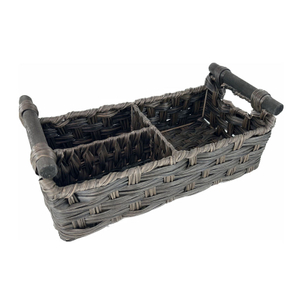
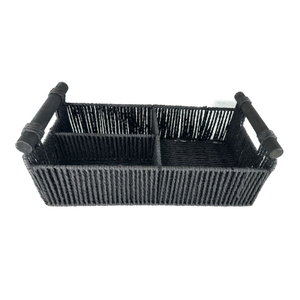
A cutlery basket is typically a multi-compartment container designed to hold forks, knives, spoons, chopsticks, or small serving tools in bulk. In commercial settings, it is often used: [searchhog.co]
- At dishwashing stations for sorting clean utensils
- At buffet or self-service counters for guest access
- At prep and plating stations for quick staff access
Well-designed cutlery baskets support linear kitchen flow by keeping utensils grouped by type at each relevant zone, from wash to service. [getbistrobee]
A spoon holder is usually a single or limited-compartment unit focused on holding spoons or ladles in a controlled, hygienic way near where they are actively used. In open kitchens, spoon holders are commonly placed: [restaurantware]
- Beside soup, ramen, or hotpot stations
- Near dessert and tasting stations for small spoons
- At bar counters for coffee, tea, and cocktails
Compared with cutlery baskets, spoon holders are more specialized and often optimized for plating and portioning rather than bulk sorting. [kriaan]
Experts in kitchen workflow emphasize the importance of zoning and linear movement: receiving → storage → prep → cooking → plating → service. Utensil storage should align with this flow, not sit arbitrarily where space happens to be available. [chefsicon]
Key principles that affect whether a cutlery basket or spoon holder serves you better:
- Zoning: Utensils for plating should live in the assembly zone, not in general storage. [kriaan]
- Streamlined pathways: Staff should not cross paths just to reach basic tools like spoons or forks. [chefsicon]
- Minimal backtracking: Walking back to a distant utensil station adds unnecessary movement and increases the risk of collision. [chefsicon]
A simple example: one cafe reduced weekly waste costs by adding a small under-counter unit near the coffee station—illustrating how micro-level layout changes directly translate into operational savings. [kriaan]
| Aspect | Cutlery Basket (Commercial Use) | Spoon Holder (Commercial Use) |
|---|---|---|
| Primary function | Bulk storage and sorting of mixed cutlery for staff or guests (searchhog.co) | Focused storage for spoons/ladles at specific stations (restaurantware) |
| Best kitchen zone | Dishwashing, buffet, general service stations (kriaan) | Plating, soup, beverage, dessert assembly zones (kriaan) |
| Impact on workflow | Reduces searching and speeds reset operations (kriaan) | Speeds plating and portion control at high-use stations (kriaan) |
| Open kitchen aesthetics | Functional; design matters for guest-facing areas (restaurantware) | Highly visible; can reinforce brand and cleanliness image (restaurantware) |
| Hygiene control | Good for separating clean vs dirty cutlery (kriaan) | Good for keeping active-use spoons off surfaces (restaurantware) |
| Flexibility | Can hold various utensil types and sizes (searchhog.co) | Typically focused on one main utensil category (restaurantware) |
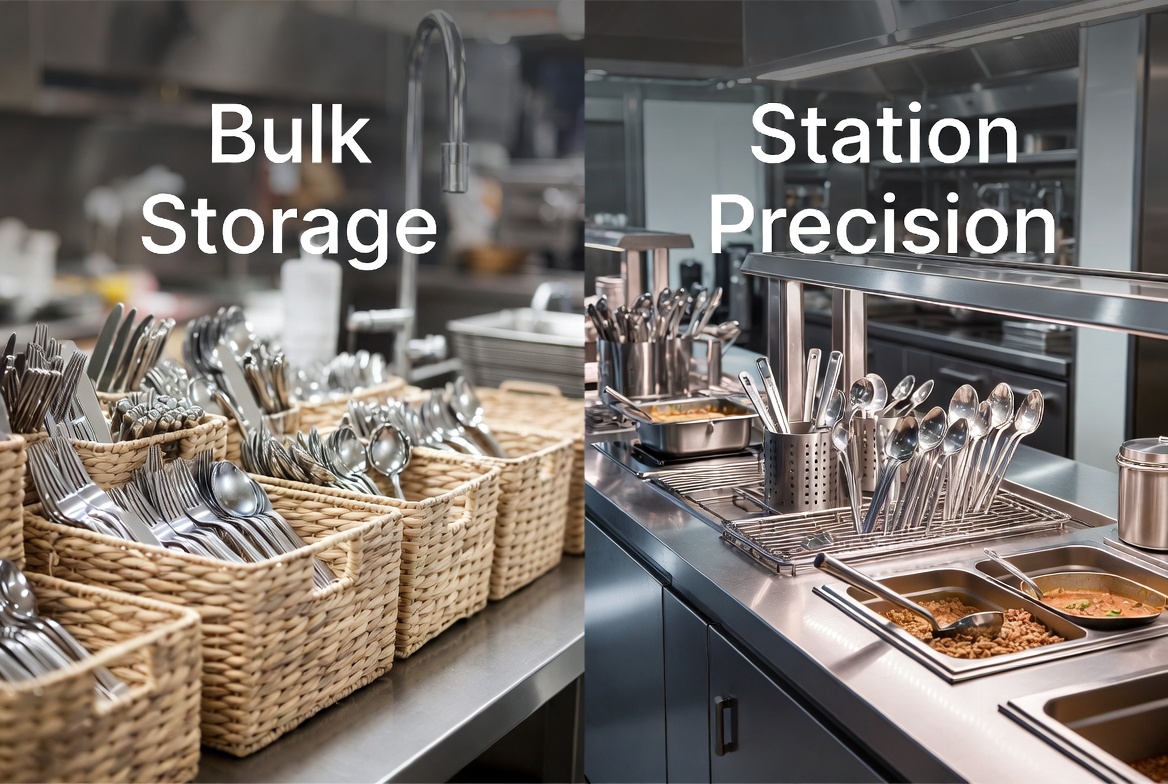
From an operator's perspective, cutlery baskets are indispensable in high-volume workflows where turnover and self-service play a major role. [chefsicon]
You should prioritize cutlery baskets when:
- You run buffets or casual concepts with self-service cutlery. [searchhog.co]
- You have high table turnover and need fast resetting with pre-sorted utensils. [kriaan]
- Dishwashing staff need structured sorting to avoid bottlenecks at the cleaning zone. [getbistrobee]
In many open kitchens, baskets perform double duty: they function behind the scenes at dishwashing and appear front-of-house in guest-access stations, making material choice and visual design particularly important. [restaurantware]
Spoon holders shine in concepts where plating precision and consistency are non-negotiable. In my experience working with operators, reallocating key tools like tasting spoons or soup ladles to station-level holders often reduces micro-delays that compound across a service. [getbistrobee]
Spoon holders are especially beneficial when:
- Your menu features broths, sauces, or tasting portions that require constant spoon access. [chefsicon]
- You operate a bar or coffee station where small spoons are part of every drink setup. [chefsicon]
- Your culinary concept depends on highly consistent plating that relies on standardized spoon sizes. [kriaan]
Because spoon holders tend to be placed in full guest view, they also become part of the visual storytelling of the kitchen—clean lines, organized tools, and well-chosen materials convey professionalism. [restaurantware]
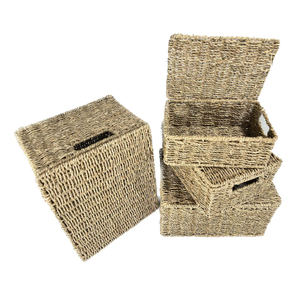
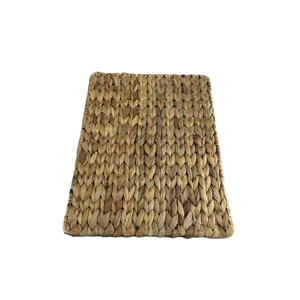
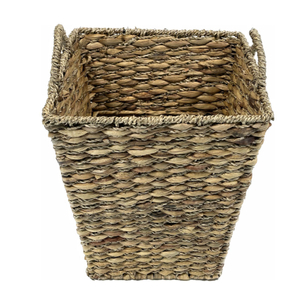
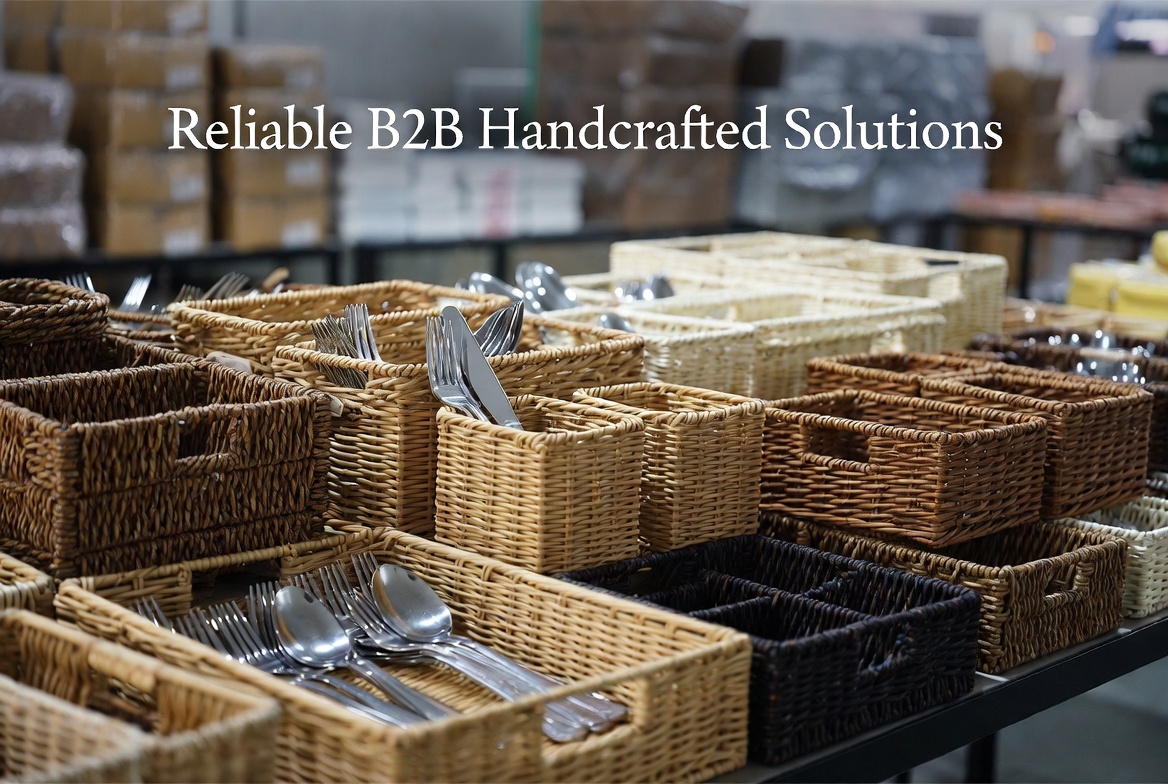
For open kitchens, the visual impact of small accessories is amplified because guests can see everything. Choosing natural woven materials such as seagrass, water hyacinth, rattan, fern, and bamboo for cutlery baskets and spoon holders allows operators to align utensil storage with the restaurant's overall brand narrative—sustainability, craft, and warmth. [searchhog.co]
Factories with long manufacturing experience in both natural fibers and synthetic weaving materials have a distinct advantage: they can provide commercial-grade durability while preserving a handcrafted look. For operators, this means: [searchhog.co]
- Strong, stable baskets that withstand daily commercial washing or wipe-down routines
- Consistent sizing and compartment layout tailored to specific utensils
- The ability to match color, weave pattern, and texture to the front-of-house design
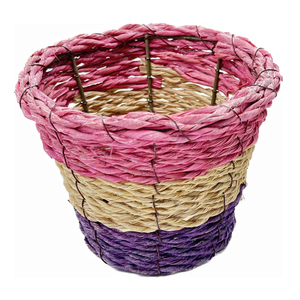
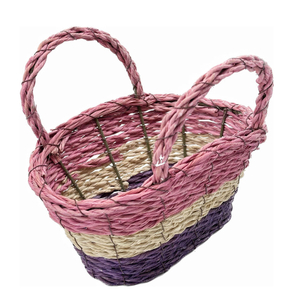
When synthetic rattan, paper rope, or woven straps are used, they can add enhanced moisture resistance and uniformity while visually echoing the natural aesthetic. [getbistrobee]
Workflow consultants frequently highlight small organizational changes as a source of disproportionate performance gains. In documented cases, targeted station redesigns have delivered 15–30% faster service times and measurable labor savings without major equipment investments. [chefsicon]
A typical pattern seen across restaurants:
- Before: Utensils stored centrally, forcing cooks to leave their station frequently. [kriaan]
- After: Station-level cutlery baskets and spoon holders placed within an arm's reach. [getbistrobee]
The practical outcomes include fewer collisions, shorter ticket times, and less cognitive load for staff, all of which are deeply visible in an open kitchen environment. [chefsicon]
Start by sketching your open kitchen layout and tracing how staff currently access spoons and general cutlery during a typical busy service. Note: [kriaan]
- Where staff cross paths just to pick up utensils
- How often they leave their station to fetch spoons or forks
- Where clean and dirty utensils temporarily "pile up"
Next, observe peak service for at least 30 minutes and mark where delays occur. Ask: [chefsicon]
- Do plating staff wait for spoons during finishing?
- Does dishwashing slow down because cutlery sorting lacks structure?
- Do servers hesitate at the pass because they cannot quickly find what they need?
Based on findings, decide which zones need cutlery baskets and which need spoon holders. [getbistrobee]
- Dishwashing and general service: baskets that separate utensil types.
- Soup, dessert, coffee, and tasting stations: spoon holders within arm's reach.
For open kitchens, prioritize utensil products that combine commercial-grade durability with a visually coherent design. Natural weaving or high-quality synthetic materials help reinforce the brand story while remaining easy to clean. [restaurantware]
Run a simple experiment over one week: measure ticket times or average service speed before and after reorganizing utensil storage. Ask chefs and service staff which changes made their work easier, then adjust basket placement, spoon holder design, or compartment size accordingly. [chefsicon]
Bringing these insights together, a balanced approach often delivers the best result:
- Use cutlery baskets to stabilize dishwashing, buffet, and general service operations. [getbistrobee]
- Deploy spoon holders at high-intensity stations where plating, tasting, or liquid service dominate. [chefsicon]
- Select utensil products made from durable natural fibers or advanced synthetics that match your open kitchen's visual concept. [restaurantware]
For operators upgrading or opening a new concept, small investments in purposeful utensil organization can support future scalability, reduce labor stress, and enhance the guest experience—all with minimal disruption to existing equipment layouts. [getbistrobee]
If you are planning to refine your commercial open kitchen workflow, start with the details guests can see and your team feels every minute of service. Evaluating how you use cutlery baskets and spoon holders is a fast, low-risk way to improve speed, hygiene, and aesthetics without major renovation. [chefsicon]
Consider partnering with experienced manufacturers who specialize in both natural weaving materials and synthetic solutions for commercial utensil storage. With the right combination of cutlery baskets and spoon holders, you can turn your open kitchen into a space that looks calm to guests, feels efficient to staff, and performs consistently across every service. [searchhog.co]
Q1: Are cutlery baskets suitable for fine-dining open kitchens?
Yes, provided you select designs and materials that match the visual language of fine dining and keep baskets out of cluttered sightlines. [chefsicon]
Q2: How many spoon holders should an average soup station have?
Most operators benefit from at least two: one for service spoons and one for tasting spoons, positioned within easy reach of the main cooking zone. [kriaan]
Q3: Do natural woven baskets hold up in high-moisture environments?
When produced with the right weaving techniques and protective finishes, natural fibers can be both durable and visually appealing in commercial use. [searchhog.co]
Q4: What is the quickest way to measure the impact of utensil reorganization?
Track average ticket times and staff movement patterns before and after changes over at least several busy services. [chefsicon]
Q5: Should utensil storage be standardized across all branches of a multi-unit brand?
Standardization helps maintain consistent workflow and training, but local adaptations based on kitchen layout and concept are often necessary. [getbistrobee]
1. Kriaan – *Kitchen Workflow Design: A Practical Guide to Maximizing Efficiency* – <https://kriaan.com/blog/kitchen-workflow-design-practical-guide/> [kriaan]
2. Restaurantware – *Designing an Open Kitchen Layout for Better Workflow* – <https://www.restaurantware.com/blogs/kitchen-and-cooking-tips/designing_an_open_kitchen_layout_for_better_workflow> [restaurantware]
3. Chef's Icon – *Optimizing Kitchen Workflow Efficiency: Tips for Restaurants* – <https://chefsicon.com/optimizing-kitchen-workflow-efficiency-tips-for-restaurants/> [chefsicon]
4. UCTME – *How to Optimize Your Kitchen Business for Search Engines* – <https://uctme.com/blog/seo-in-kitchens-how-to-optimize-your-kitchen-business-for-search-engines/> [uctme]
5. Search Hog – *SEO for Cookware & Kitchen Equipment Companies* – <https://searchhog.co.uk/seo-for-cookware-brands/> [searchhog.co]
6. BistroBee – *Creating Efficient Kitchen Workflows That Scale* – <https://www.getbistrobee.com/blog/efficient-kitchen-workflows-scale> [getbistrobee]
7. Restaurant Equipment SEO – *SEO Content Strategy: Boost Conversions in Restaurant Gear* – <https://restaurantequipmentseo.com/blogs/restaurant-equipment-seo-blog/seo-content-strategy> [restaurantequipmentseo]
8. Chef's Icon – *Optimizing Workflow in Your Restaurant Kitchen: Practical Tips and Strategies* – <https://chefsicon.com/optimizing-workflow-in-your-restaurant-kitchen/> [chefsicon]