Views: 222 Author: Tomorrow Publish Time: 2025-02-09 Origin: Site


Content Menu
● Introduction to Basket Weaving for Kids
● Simple Cardboard Basket Weaving
>> Materials:
● Advanced Basket Weaving Techniques
>>> Steps:
>>> Instructions:
● Creative Basket Weaving Projects for Kids
>> 3. Recycled Material Baskets
>> 4. Decorative Wall Hangings
● Tips for Teaching Basket Weaving to Kids
● FAQ
>> 1. What is the best age to start teaching basket weaving to kids?
>> 2. How long does it typically take to complete a basic basket?
>> 3. Are there any alternatives to yarn for basket weaving?
>> 4. Can basket weaving be incorporated into school curricula?
>> 5. How can I make basket weaving more challenging for older kids?
Basket weaving is a fun and educational craft that can help children develop fine motor skills, patience, and creativity. This ancient art form has been practiced by cultures worldwide for thousands of years, and now it's time to introduce it to the younger generation. In this comprehensive guide, we'll explore various basket weaving techniques suitable for kids, along with tips, tricks, and exciting projects to keep them engaged.
Basket weaving is an excellent activity for children as it combines creativity with practical skills. It teaches them about patterns, textures, and spatial awareness while also providing a sense of accomplishment when they complete their own handmade basket. Before diving into the specific techniques, let's look at some of the benefits of basket weaving for kids:
- Improves hand-eye coordination
- Enhances fine motor skills
- Boosts creativity and self-expression
- Teaches patience and perseverance
- Provides a sense of achievement
- Introduces concepts of geometry and mathematics
Before starting any basket weaving project, it's essential to gather the necessary materials. Here's a list of basic supplies you'll need:
- Cardboard or paper plates (for base templates)
- Yarn or twine
- Scissors
- Glue or tape
- Felt (optional, for lining)
- Decorative elements like beads or ribbons (optional)
For more advanced projects, you might also consider:
- Reed or raffia
- Basket weaving tools (awl, bodkin, etc.)
- Natural materials like pine needles or grass

One of the easiest ways to introduce basket weaving to kids is by using cardboard as a base. This method is perfect for younger children or beginners.
1. Cut a circular shape from cardboard, about 6-8 inches in diameter.
2. Make evenly spaced cuts around the edge, about 1 inch apart and 1 inch deep.
3. Thread yarn through the cuts, creating "spokes" that radiate from the center.
4. Begin weaving by going over and under each spoke with a long piece of yarn.
5. Continue weaving, pushing each row down tightly to create a firm basket.
6. When the basket is the desired height, tie off the yarn and trim any excess.
Here's a video tutorial demonstrating this technique:
Another simple method uses paper plates as a base, which is perfect for classroom settings or group activities.
- Paper plates
- Scissors
- Yarn in various colors
- Hole punch (optional)
1. Cut slits around the rim of the paper plate, about 1 inch apart.
2. Choose a starting point and begin weaving yarn in and out of the slits.
3. Continue weaving, changing colors as desired to create patterns.
4. When you reach the desired height, tie off the yarn and trim any excess.
For older children or those who have mastered the basics, you can introduce more advanced techniques using traditional materials like reed or raffia.
Coil basket weaving is a technique that uses a continuous coil of material, usually raffia or long grass, wrapped around a core.
1. Start with a small coil of raffia or grass.
2. Use a needle and thread to stitch the coil together, forming a tight spiral.
3. Continue adding material to the coil and stitching it in place.
4. Shape the basket by adjusting the angle of the coil as you work.
Plaited basket weaving involves interweaving flat strips of material, such as reed or paper.
1. Create a base by weaving strips in a checkerboard pattern.
2. Bend the strips upward to form the sides of the basket.
3. Continue weaving additional strips around the sides.
4. Finish the top edge by tucking in or trimming excess material.
Here's a video demonstrating plaited basket weaving:
To keep children engaged and excited about basket weaving, try these fun and creative projects:
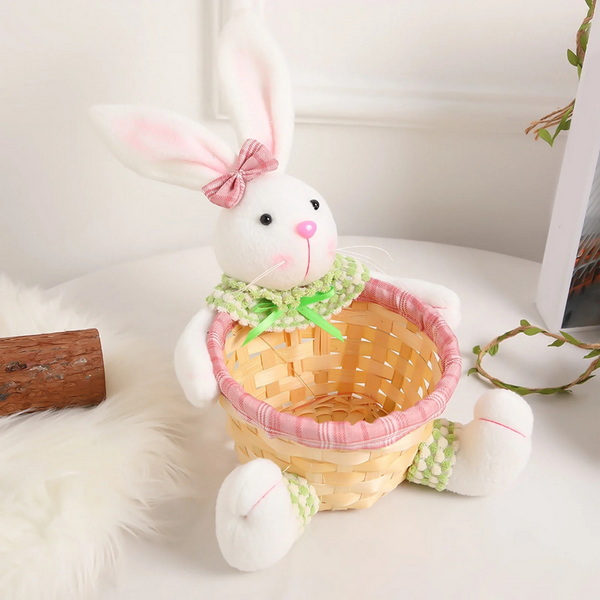
Create small baskets perfect for holding Easter eggs or candy. Use pastel-colored yarn and add a handle for a festive touch.
Encourage kids to collect natural materials like pine needles, grass, or flexible twigs to incorporate into their baskets for a unique, rustic look.
Use recycled materials like newspaper strips or plastic bags cut into strips for an eco-friendly weaving project.
Create flat, circular weaves that can be hung on the wall as decorative pieces. Add beads, feathers, or other embellishments for extra flair.
Weave small, cylindrical baskets to use as pencil holders or desk organizers.
1. Start with simple projects and gradually increase complexity.
2. Use bright, colorful materials to keep children engaged.
3. Encourage creativity and experimentation with patterns and designs.
4. Make it a group activity to foster collaboration and sharing of ideas.
5. Incorporate storytelling or history lessons about basket weaving traditions.
When teaching basket weaving to kids, keep these safety tips in mind:
- Always supervise children when using scissors or sharp tools.
- For younger children, pre-cut materials to avoid accidents.
- Use child-safe, non-toxic glues and paints.
- Be aware of potential allergies to natural materials like raffia or grass.
Basket weaving is a wonderful craft that offers numerous benefits for children. It not only helps develop important skills but also provides a sense of accomplishment and creativity. By starting with simple projects and gradually introducing more complex techniques, kids can develop a lifelong appreciation for this ancient art form. Whether using cardboard, paper plates, or traditional materials, basket weaving offers endless possibilities for fun and learning.

Children as young as 5 or 6 can start with simple cardboard or paper plate weaving projects. More complex techniques can be introduced around age 8-10, depending on the child's dexterity and interest.
A simple cardboard or paper plate basket can be completed in 30 minutes to an hour. More complex projects may take several hours or even days, depending on the size and technique used.
Yes, many materials can be used for basket weaving, including raffia, reed, paper strips, plastic strips from recycled bags, and even natural materials like pine needles or grass.
Absolutely! Basket weaving can be integrated into art classes, history lessons (discussing cultural traditions), math (patterns and geometry), and even science (studying plant materials used in weaving).
For older children, introduce more complex weaving patterns, use traditional materials like reed or raffia, or encourage them to design their own basket shapes and experiment with different weaving techniques.
[1] https://www.triedandtrueblog.com/super-easy-cardboard-basket-weaving/
[2] https://www.nowthatspeachy.com/2020/04/how-to-make-paper-weaved-basket-free.html
[3] https://www.youtube.com/watch?v=Rt3Zw7WzHCs
[4] https://www.craftpassion.com/easy-basket-weaving/
[5] https://www.youtube.com/watch?v=rt0zABKeqZ8
[6] https://ladyleeshome.com/how-weave-simple-basket/
[7] https://www.youtube.com/watch?v=z9ItQ67A5Yo
[8] https://theofflinekid.com/basket-weaving-for-kids/